

Our beautiful Cape Cod is a sight to behold year-round, but winter presents us all with unique challenges for lawn care. The region’s coastal climate brings fluctuating temperatures, salt-laden winds, and the occasional heavy snowfall, all of which can impact the health of your lawn. Proper winter lawn care ensures that when spring arrives, your grass and plants are primed for lush growth.
As we prepare for a few more winter snowstorms headed our way in the next few weeks, you might be wondering how you can best take care of your lawn in order to pave the way for a lush spring garden. Our team at Agway put together a comprehensive guide to maintaining a healthy lawn through the colder months in Cape Cod. Keep reading for all of the details!
How to Prepare Your Lawn for Winter
Aerate and Over seed in Fall
The key to a resilient winter lawn begins in the fall. Aerating helps alleviate soil compaction, allowing roots to access oxygen and nutrients more efficiently. Over seeding with a cool-season grass variety, such as Kentucky bluegrass or perennial ryegrass, ensures thick, healthy growth come spring.

Fertilize Before the First (and Every) Frost
A late-fall application of a winterizing fertilizer high in potassium strengthens root systems, making your lawn more resilient against freezing temperatures and foot traffic. As we continue to have frost and snowstorms on the Cape, keep fertilizing during the in-between times.
Mow One Last Time
Before winter sets in, gradually lower your mowing height. Keeping grass too long can attract disease, while cutting it too short may leave roots vulnerable to frost damage. Maintaining a height of around 2 to 2.5 inches is ideal for most Cape Cod lawns.
Protecting Your Lawn During Winter
Minimize Foot Traffic
Grass becomes dormant in winter, making it more susceptible to damage. Repeated foot traffic can lead to compacted soil and dead patches, so it is best to keep pathways clear and encourage family members and pets to avoid walking on frozen grass.
Manage Snow and Ice
Snow itself acts as an insulator and it actually protects your lawn from extreme cold. However, heavy snow accumulation can lead to snow mold, a fungal disease that creates unattractive grass patches in spring. If you must use deicing products, opt for calcium chloride instead of rock salt, which can damage grass and soil health.
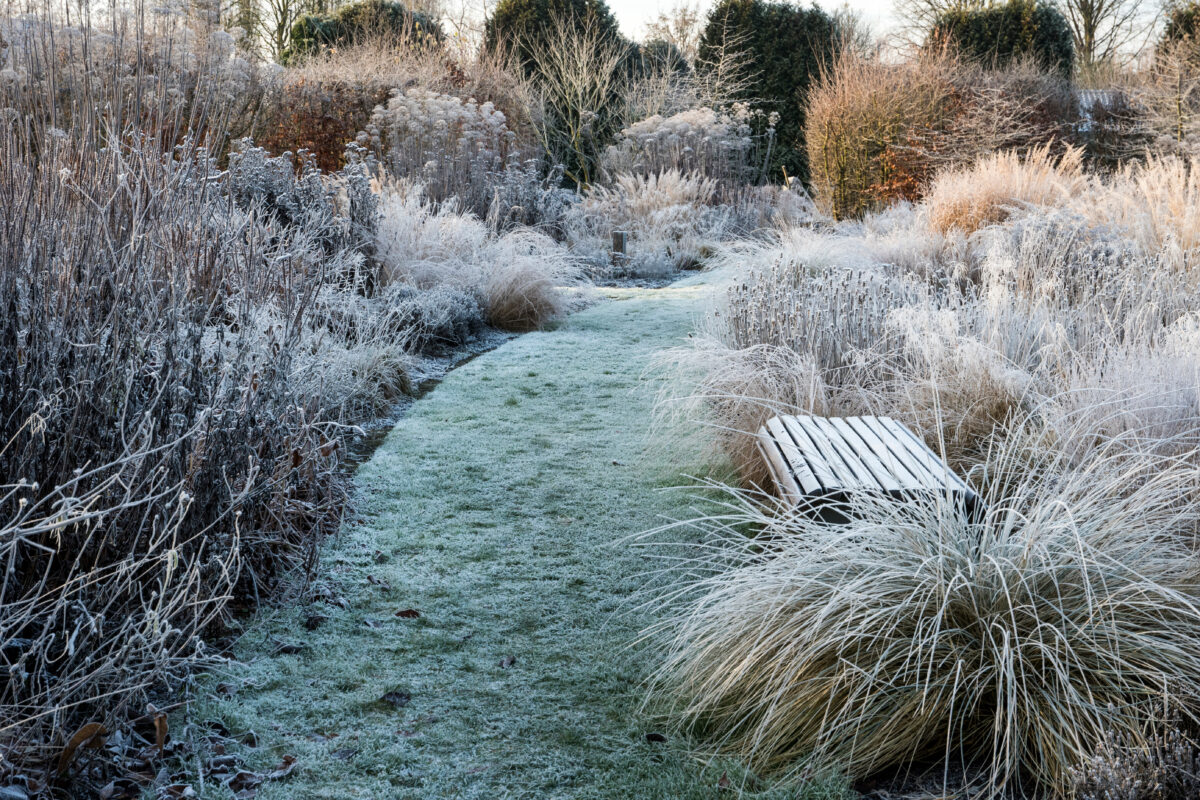
Keep Leaves and Debris Cleared
A layer of leaves or debris left on your lawn through winter can smother the grass and create a breeding ground for mold and pests. Be sure to rake your lawn in late fall and periodically throughout the winter months clearing any accumulated debris during mild winter days. This will help keep your lawn healthy and ready to bloom come spring.
Addressing Common Winter Lawn Issues
Winter Desiccation
The coastal winds that we experience here on the Cape can lead to winter desiccation, where moisture is drawn out of the grass blades and foliage faster than it can be replenished. To prevent and/or stop this, ensure your lawn is well-watered before the ground freezes and consider applying an anti-desiccant spray on particularly exposed areas.
Rodent Damage
Voles and other small rodents can tunnel under snow cover, causing damage to grass roots. Keeping your lawn trimmed in the fall and eliminating excess debris will reduce hiding spots for these pests.
Snow Mold
We mentioned this fungal disease earlier in the blog, but it can be very prevalent and damaging during our wet and cold winter months. Snow mold thrives in prolonged snow cover or areas where snow piles up unevenly. Raking lightly in the early spring can help air out affected areas and promote faster recovery. Make sure you have the right rakes and lawn tools as we begin to turn the corner into spring.

Preparing for Spring Recovery
As the winter thaws and temperatures begin to rise, proper spring preparation will ensure your lawn bounces back quickly. After all, we want to achieve those big, beautiful blooms, right?
Avoid Early Raking
It’s tempting to start clearing up your yard as soon as the snow melts, but raking too early can tear delicate new grass shoots. It’s very important to wait until the ground is firm and relatively dry.
Apply a Spring Fertilizer
A slow-release fertilizer rich in nitrogen will help wake your lawn up from dormancy and encourage healthy growth.
Address Bare Patches
If winter damage has left bare spots in your lawn, reseeding in early spring with the right grass variety will help restore a lush, inviting, and functional lawn.
Agway’s Guide to Cold Weather Lawn Care

Cold weather lawn care is absolutely essential for keeping your Cape Cod yard healthy year-round. With proper fall preparation, winter protection, and spring recovery efforts, your lawn will be primed for a lush, green season ahead. By implementing these best practices, you’ll not only protect your lawn from the challenges of winter but also ensure a vibrant landscape that’s ready to thrive when warmer weather returns. With gardening and lawn care, it’s all about setting your lawn up for success in the next season.