
Nature undergoes many changes in the fall. For most plants and animals, the fall season is used as a time to prepare for winter.

The last of the hummingbirds and monarch butterflies make their final garden rounds before migrating to warmer climates. Small animals such as squirrels, chipmunks, mice, and moles get busy stockpiling food to have available throughout the winter months. Plant productivity slows down as they prepare for dormancy. Trees drop their ripened seeds to ensure the continuation of their species. For other organisms such as fungi, autumn is a time for reproduction as their fruiting bodies appear and their spores are spread.
Plants spend the summer months growing, making, and storing food which they can then use during the cold and dark seasons. Over the last millions of years, plants have revolutionized a plan to safeguard their survival through the coming winter season.
Perennial Survival
Perennials survive the winter because they have several adaptations that help them withstand freezing temperatures. The nutrients captured in their leaves move to the stems and roots to be stored for the winter. The roots of perennials increase their sugar uptake which is a natural antifreeze and will resist freezing in temperatures well below 32°F.

At the same time, water within the root cells moves out of the cells and into the surrounding soil, which allows the roots to sustain freezing temperatures without harming the tissue. Perennials also will slow or stop growth, dropping their leaves and allowing exposed parts to die.
Tree and Shrub Survival
Trees and shrubs undergo changes during the fall at the cellular level.
Plants have an amazing ability to sense changes in weather and at the first hint of cooler days, they begin to prepare themselves for winter. Like perennials, they slow their growth. Chlorophyll production stops and leaves lose their green color, which provides us with some of the most beautiful fall foliage nationwide.

Trees and shrubs then undergo cellular changes to become more tolerant of cold temperatures. These changes include shrinkage and dehydration as water moves out of the plant. To protect their cells from freezing, water is transferred from inside the cells to tiny spaces surrounding the outside areas of the cells. Sugar concentrations increase in the empty cells, making them glasslike and unbreakable. The metabolism of trees and shrubs then slows down to conserve energy.
Abscisic acid, a growth hormone, forms in the terminal buds of deciduous trees, signaling the leaves to drop off and suspending growth. The tip of the stems develop into buds that enter a state of dormancy. These buds are where new leaves, flowers, and branches will be able to develop in the following spring.
Evergreens
Evergreen trees have evolved to survive winter in a number of ways that are different from deciduous plants. Leaf development is the key to any plants survival. Without leaves, photosynthesis can not take place and therefore light can not be converted into plant energy. Like humans without calories, the plant will die.

Nature has come up with a way for perennials, trees, and shrubs to go through a period of dormancy during the cold winter months, returning to life again in the spring. If it feels magical to you, it’s because it kind of is!
But why are evergreens able to retain their leaves all winter without the freezing issue? Well, it turns out Conifers, the group most associated with evergreens, are one of the oldest tree lineages. Evolving hundreds of millions of years ago, Conifers had to endure one of the most extreme cold periods in Earth’s development, marked by glacial cycles and long winters.
It was during that period that evergreens developed the characteristic thin, needle-like leaves of evergreens and a thick waxy coating that helps minimize water loss in cold, dry conditions. Sugar, jasmonic acid (a plant stress regulator), and ethylene (a plant growth regulator) become more concentrated within the cells of the needles during the winter months, which depresses the freezing point of water.
Some evergreens even adapted special valves that automatically seal off individual cells that are frozen! By sacrificing one group of cells to the cold, it prevented nearby cells from freezing as well.
Other evolutionary adaptions also developed over time for evergreens.
The outer bark of trees developed many air pockets, rather than living cells filled with liquid that can freeze. The air pockets in the bark help provide insulation and protection against freezing and cracking during the winter. Evergreens developed stomata that are positioned to reduce evaporation.
Stomata are tiny pores or openings on the surface of plant needles (or leaves), surrounded by specialized cells called guard cells. These guard cells regulate the exchange of gases like carbon dioxide and oxygen between the plant and its environment. Guard cells essentially act as the plant’s “mouth” for breathing during photosynthesis.
Lastly, to survive the winters, Evergreens can continue to produce energy through photosynthesis, though at a much slower rate due to less sunlight.
Nature and Evolution – Hand in Hand
The Earth and its environment has been undergoing constant changes since its birth 4.5 billion years ago and evolution has been there to help nature adapt to these constant changes. Organisms within ecosystems must constantly evolve and shift their habitats to accommodate changing conditions like temperature, climate, and available resources.
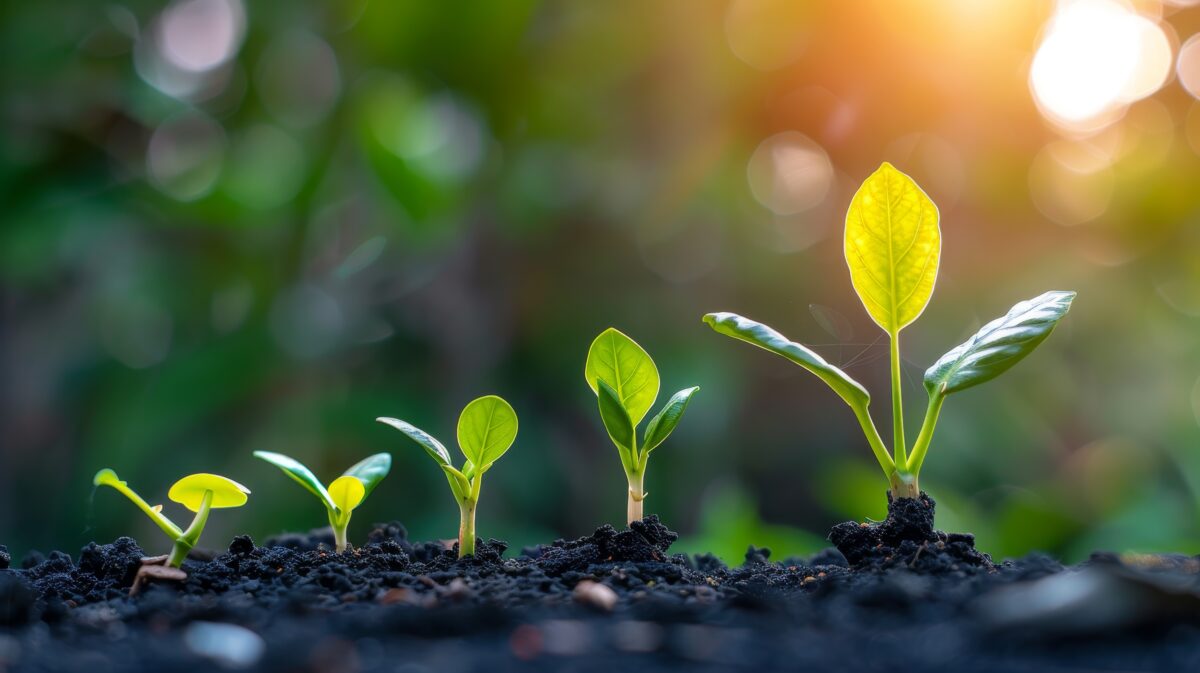
Often times, this can take thousands of years, and environmental changes can sometimes outpace a species ability to adapt, leading to potential extinction or population decline. Scientists estimate that Earth will exist for another 4-5 billion years…..and nature and evolution will continue to be there carrying us through it all.
When we look at the big picture, our own time on earth is minuscule, merely a single frame within it. How we make use of this time can be significant and it may make you really appreciate nature all the more.
Some Interesting Facts About Plants
* Plants actually require exposure to cold winter temperatures in order to begin flowering again the following spring, a process known as “vernalization.”
* Bulbs such as hardy cyclamen, hyacinths, tulips and daffodils undergo a summer dormancy as the above ground portion of the perennial dies back completely and the plant survives dry conditions as a large underground corm.
* The longest recorded plant dormancy belongs to sycamore maples in the United Kingdom, which can remain dormant for up to 320 years before actively growing and expanding!
* As temperatures rise above 94°F, photosynthesis slows down and trees begin to run out of energy.
* At about 115°F, trees start to die and experience “heat stroke” symptoms with excessive transpiration, cell death and branch die back. Permanent damage or death can occur without treatment.
We’ll never get enough of learning about plants, nature, and evolution. After all, these are the things that keep life afloat and that allow us to adapt to our ever changing climate. Be sure to think about your gardens and plants as the seasons continue to change and the weather gets cooler. Our team at Agway is more than happy to help you put your gardens to bed with our tips and tools. Until next time!
David Christopher