
They consist of over 1.5 million identified species. They’re in virtually every conceivable habitat. They feed on an endless array of foods. They play an important role in primary and secondary decomposition. They’re observed and studied by naturalists worldwide. And yet very few people feel comfortable being around them!

INSECTS!
About 7,000 new species are discovered each year but Entomologists suggest there may still be as many as 10 million undiscovered insects worldwide!
Five Types of Insects
- Bugs and Beetles
- Butterflies and Moths
- Bees, Wasps and Ants
- Flies, Mosquitoes and Gnats
- Crickets, Grasshoppers and Locusts
Most people are wary of creepy crawling insects and bug phobia, or entomophobia, is a real symptom in roughly 9% of adults in the USA. Those affected show symptoms of anxiety, high heart rate and even nausea.
The fact is 97% of all insects are beneficial to sustaining a well balanced ecosystem and perform vital functions in our environment and agriculture needs! This means only 3% of the 1.5 million are destructive or a nuisance pest. That’s not bad considering your own back yard can be home to thousands of insects at any one time!
Categories of Insects
Almost all insects fall into one of three categories: pollinators, predators, parasites.
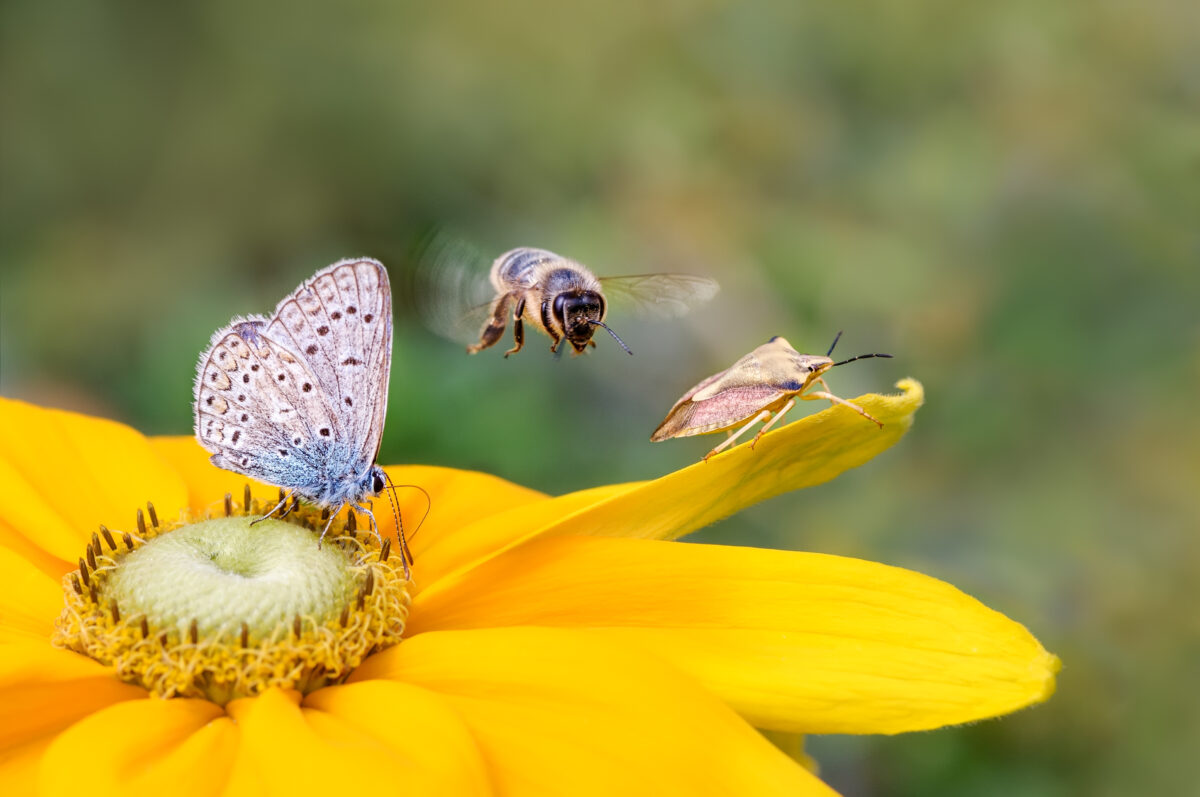
Pollinators
We depend on these insects to pollinate natures plants. Some of the main pollinators include bees, butterflies, flies, and moths.
Predators
Along with other predators in the animal kingdom, these insects eliminate pests by eating them. Ladybugs, praying mantis, and green lacewing larvae are just a few of the insects that fall into this category.
Parasites
Like predators, parasites also prey upon other insects, but in a slightly different way. They lay their eggs on or in the bad bugs, and when the eggs hatch, the larvae feed on the host insects. Parasitiod wasps are the main members of this category.
The Benefits of Insects
Contrary to the fear and phobias that they can connote, most insects do good things. Insects such as flies and beetles often feast on rotting food, dead animals and feces, breaking down organic material and returning those nutrients to the earth. Some insects work as pollinators, some eat the bag bug, and some turn the soil and aid in soil aeration.
Not All Bugs Are Good
Other insects unwittingly serve as a food source for wildlife and even humans! Though the bad bugs are few in number, when plant damage is done, it can be devastating!

If you witness a bug causing extensive damage to what it’s eating, it’s likely a pest. A large number of insects congregating on a plant may indicate a pest infestation.
Other bad insects cause diseases in both humans and animals. These are the insects that are typically the most feared. The insects that carry and spread diseases are usually the blood suckers such as mosquitoes, ticks, bedbugs, and lice.
The Interesting Evolution of Insects
There’s yet another group of insects that have found ways through evolution to blend in with its surroundings by altering its looks through camouflage. These make up some of the weirdest and ugliest of bugs!
Giant water bugs have flat bodies and long legs that they use for swimming and lurching at prey with piercing front legs. Grabbing tadpoles, young fish and insects, they inject venomous digestive saliva into their bodies.
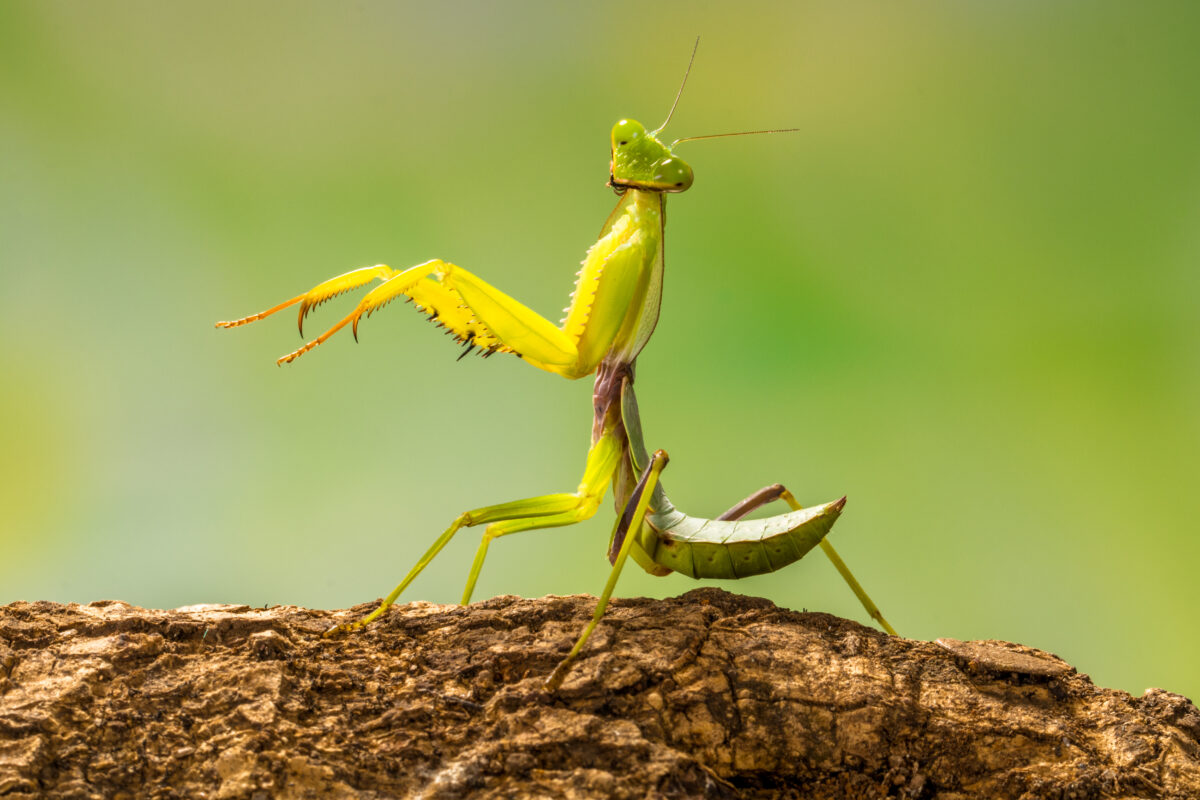
Praying Mantis
The praying mantis has been the poster child of many science fiction movies! Can you think of a few? With its triangular head, large compound eyes and long serrated front legs, it’s as scary and ugly as they come. This efficient killing machine is a master of disguise and will wait motionless for unsuspecting insects, spiders, amphibians or small reptiles to wander too close. Pouncing with lightening speed, they pierce the body with front leg spikes and slowly consume their catch alive! We can see why these bugs make the perfect villian!
Probably the most repulsive and grotesque insect on the planet is the cockroach. Roaches give off secretions from their mouths and glands that can cause nausea and even mild vertigo. As they move about they leave trails of bacteria, feces, and regurgitated partially digested food which other roaches pick up on and follow to the food source.
Insects in Our Ecosystem
There’s no denying insects play an important role in our ecosystem. The natural inclination for most people is to kill just about any bug they see. Our fear of insects is real and most of us view anything with more than 4 legs a threat. Some fears are rational, and occasionally having to kill one indisputably justified.

But perhaps next time you’re wanting to pass judgement and squash that bug maybe take a step back, take a closer look and ask yourself…are you one of the good guys or one of the bad?
Fun Facts About Insects
- There are on average about 400 million insects in 1 acre of land.
- There are some 5,000 species of ladybugs displaying a wide range of color patterns.
- The Titan beetle which lives in the Amazon rainforest can measure 6 1/2″ long and can snap a pencil in half with its clamping jaws.
- Spiders are not insects. They are in the class ARACHNIDA while insects belong in the class INSECTA.
- Contrary to popular belief that fruit flies only live 24hrs, the average life span is 30-50 days! Females will lay up to 500 eggs in several batches during this lifetime.
- A bees wings beat 190 times per second!
- A caterpillar has 12 eyes! These simple eyes are arranged in two groups of six on each side of the head. They help the caterpillar to detect light and movement but do not provide clear vision like our eyes.