
We’re in the thick of the holiday season here in Cape Cod! It’s always a delight to see the homes around us transform into festive displays of lights, ornaments, and greenery. Among the many decorations that are a part of the Christmas season, one stands out as both timeless and symbolic: the Christmas wreath. Whether hanging on doors, walls, or fireplaces, wreaths hold a special place in our holiday traditions, but have you ever stopped to wonder why we hang wreaths for Christmas?
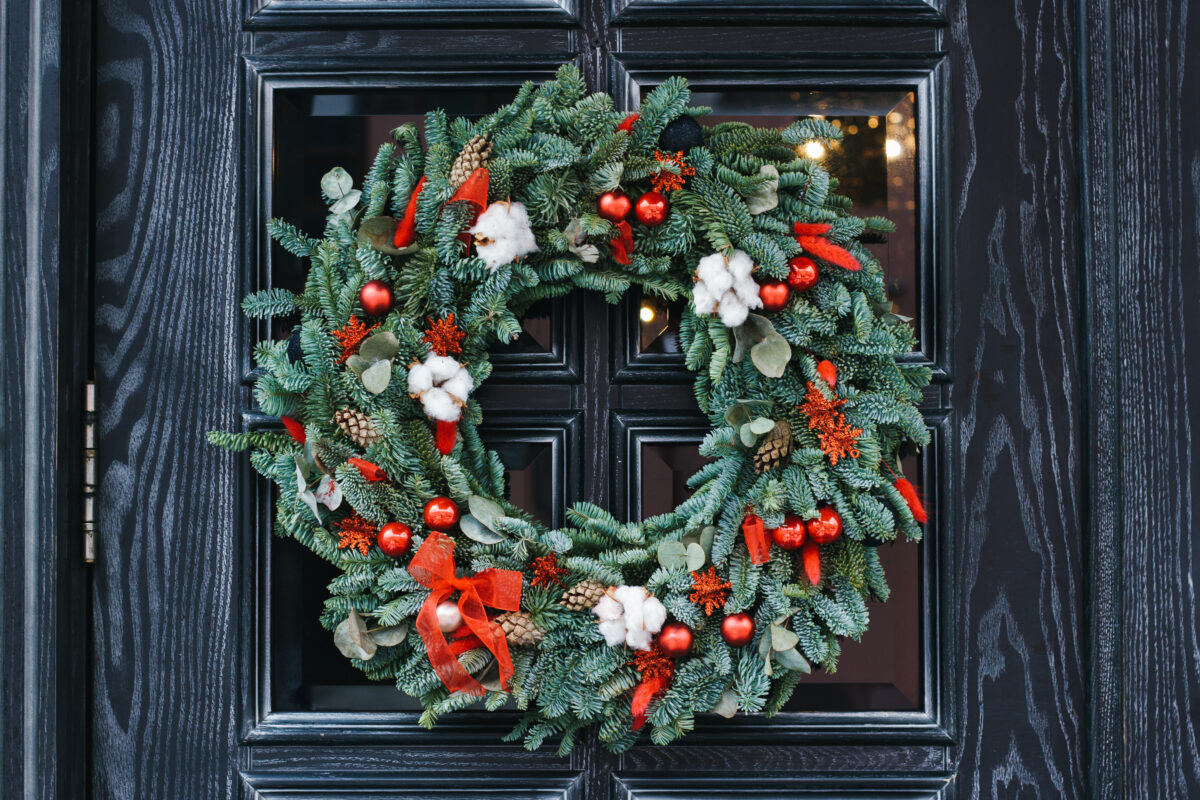
Christmas wreaths have a history rich with cultural, religious, and seasonal significance. From ancient rituals to modern celebrations, the wreath embodies the spirit of Christmas in ways that go beyond just decoration.
The Origins of the Christmas Wreath
The history of the Christmas wreath dates back thousands of years, even going as far back as ancient civilizations. Long before the rise of Christianity, people used wreaths as a symbol of strength, protection, and the cycle of life.
Ancient Pagan Practices
In pre-Christian times, evergreen plants were celebrated for their ability to remain lush and green during the harsh winter months. Ancient cultures, including the Romans, Greeks, and Druids, would create circular arrangements of evergreen branches, often accompanied by holly, ivy, or pinecones. These circular wreaths represented the cycles of the nature around them, symbolizing life, death, and rebirth. Wreaths during this time were also used during solstice celebrations to symbolize and honor the changing seasons.
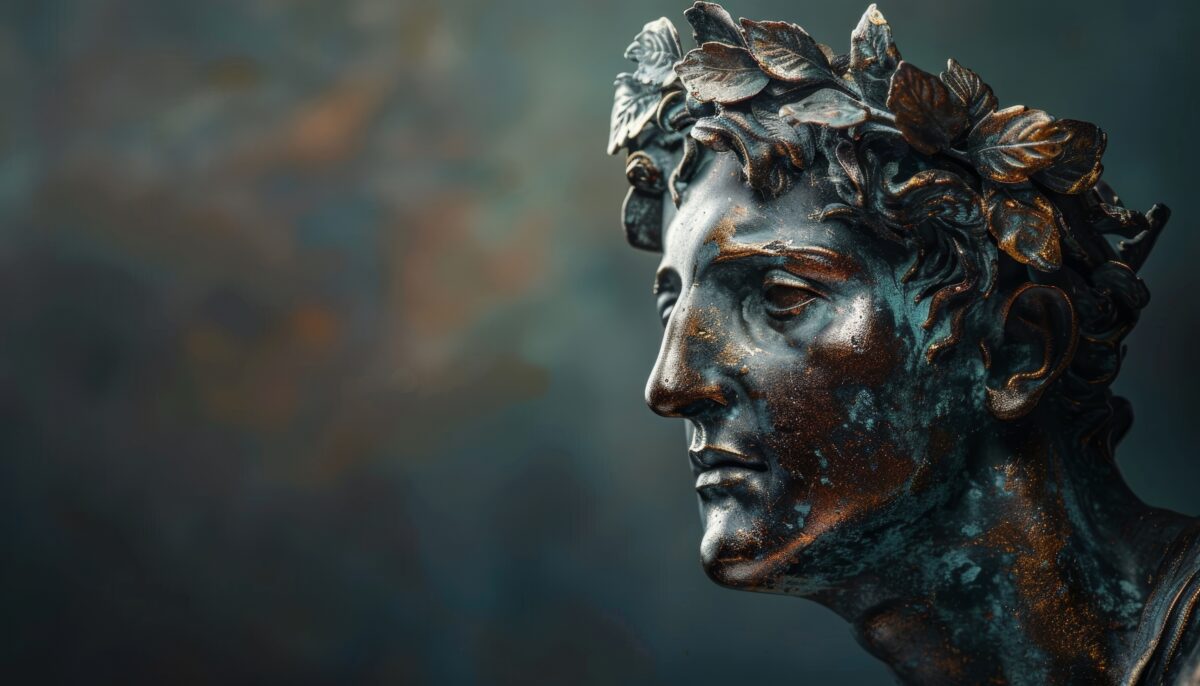
For the Romans, wreaths were also associated with victory and honor. Laurel wreaths crowned the heads of victorious warriors and statesmen, signifying achievement and eternal life. This symbolism naturally extended to the use of evergreen wreaths during winter festivals.
The Advent Wreath
The transition from pagan to Christian practices instigated the transformation of many old traditions into religious observances. By the 16th century, Christians in Germany began using advent wreaths as a way to mark the days leading up to Christmas. These wreaths were made of evergreen branches arranged in a circle and they are still used as Christmas traditions today.
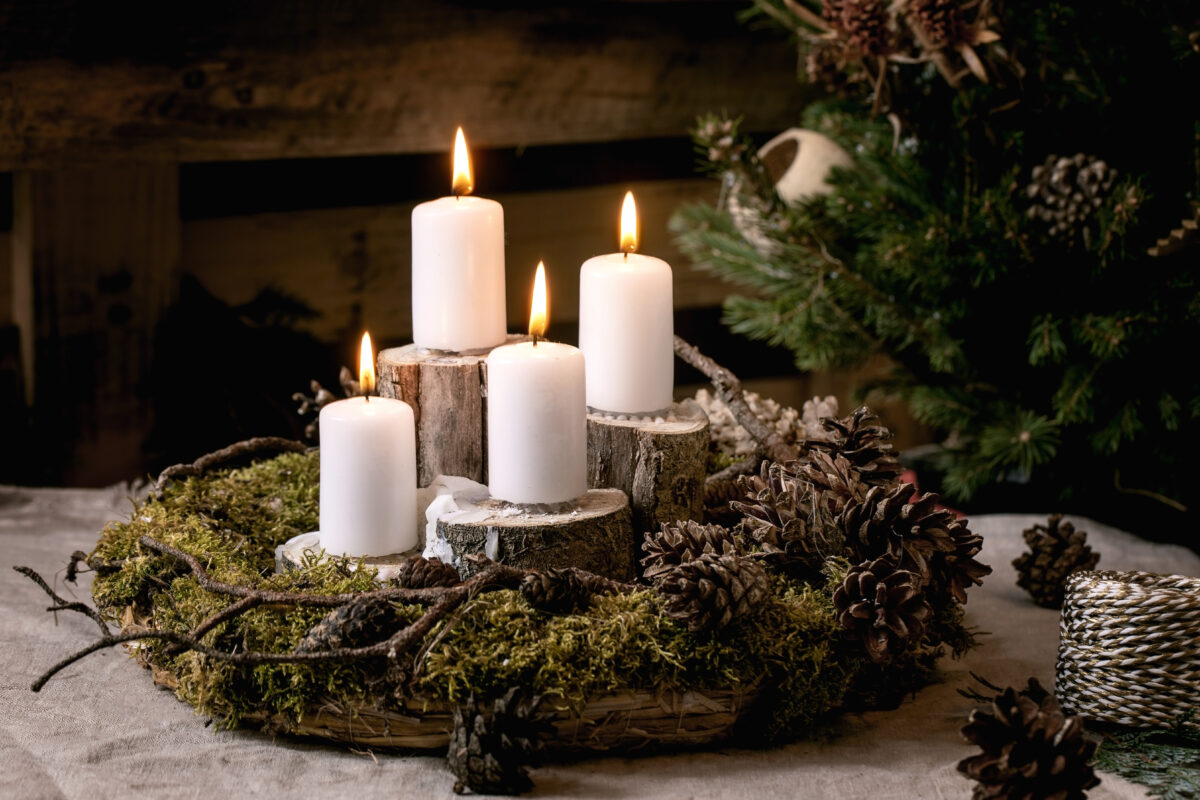
Advent wreaths traditionally feature four candles (three purple and one pink) set within the greenery, with a fifth white candle sometimes placed in the center. The lighting of these candles each Sunday before Christmas carries deep spiritual meaning, with each flame representing hope, faith, joy, and peace.
So much of our modern American and European Christmas traditions come from Central European countries like Germany. Traveling to see the European Christmas Markets is on our bucket list, for sure!
Why a Circle? The Symbolism of Shape
One of the most defining characteristics of a wreath is its circular shape. This design carries layers of symbolism (mainly due to its circular nature) that resonate across cultures and religions.
- Eternity and Continuity: The circle, with no beginning or end, symbolizes infinity and eternity. In the context of religion, for Christians around the world, it represents the promise of eternal life through Christ.
- Unity and Wholeness: The continuous circle reflects harmony and completeness, a reminder during the Christmas season of the importance of family, love, and togetherness.
- The Wheel of the Year: In pagan traditions, the circle mirrored the cycle of the seasons, particularly the winter solstice, when light begins to return to the world after the darkest days of the year.

Evergreens: The Heart of the Wreath
The use of evergreen plants is not only practical but deeply symbolic. These resilient trees and shrubs thrive even in the dead of winter, making them a perfect representation of the life and renewal that many of us celebrate each Christmas.
- Holly and Ivy: Often included in wreaths, holly represents the crown of thorns worn by Christ during the crucifixion, with its red berries symbolizing his blood. Ivy, is widely seen as a symbol of faithfulness and endurance.
- Pinecones: These are commonly added to wreaths as a nod to fertility and the promise of new growth in spring.
- Bay Leaves: In classical times, bay leaves symbolized victory and peace, aligning with the message of Christmas.
The use of evergreens also has practical roots. Their lovely aroma and strong nature make them ideal for creating decorations that last throughout the holiday season.

The Wreath as a Christmas Tradition
The modern Christmas wreath as we know it evolved from these ancient and Christian practices. By the 19th century, wreaths became a widely adopted holiday decoration, especially in Europe and North America. With the rise of mass production in the Victorian era (1873-1901), wreaths became more accessible and varied, incorporating ribbons, ornaments, and other embellishments.
Today, the Christmas wreath has become a universal symbol of welcome and goodwill. Hanging a wreath on your front door is not just a decorative gesture, it’s a way to invite the joy, warmth, and spirit of the holiday season into your home!
Beyond the Front Door: The Versatility of Wreaths
While wreaths are most commonly hung on doors, their versatility makes them great options for a variety of holiday settings.
- Centerpieces: Smaller wreaths can serve as stunning centerpieces for holiday tables, often surrounding candles or bowls of ornaments.
- Mantel Decorations: A wreath above the fireplace adds a festive focal point to living spaces.
- Grave Markers: Placing wreaths on graves during Christmas is a beautiful way to honor and remember loved ones. This tradition is particularly observed in the United States during events like Wreaths Across America
Crafting Personal Meaning
In addition to their historical and religious significance, wreaths have become a form of personal expression. Many families and individuals craft their own wreaths, incorporating unique elements that reflect their tastes, traditions, or local design types. From minimalist designs featuring twigs and dried oranges to lavish arrangements adorned with lights and baubles, the possibilities are endless!
The act of making or choosing a wreath can also be a meaningful ritual. It’s an opportunity to reflect on the themes of the season—hope, renewal, and community—and to carry these sentiments into the New Year.
While you’re decorating your Gingerbread Houses, Christmas Cookies, and Christmas Trees, you might want to create some wreaths, too!
Other Hanging Holiday Traditions
Wreaths are not the only decorations we hang during the Christmas season. There are many other festive hangings that also carry rich traditions and meanings.
Mistletoe: This plant, with its small white berries, has roots in ancient Druid and Norse traditions. Mistletoe was believed to possess magical properties and symbolize peace and fertility. Today, it’s best known for the tradition of stealing a kiss beneath it, and of course, Justin Bieber’s Christmas hit.
Garlands: Long strands of greenery, often made of pine, fir, or cedar, are draped along mantels, staircases, and doorways. Garlands, like wreaths, symbolize everlasting life and the abundance of the season.
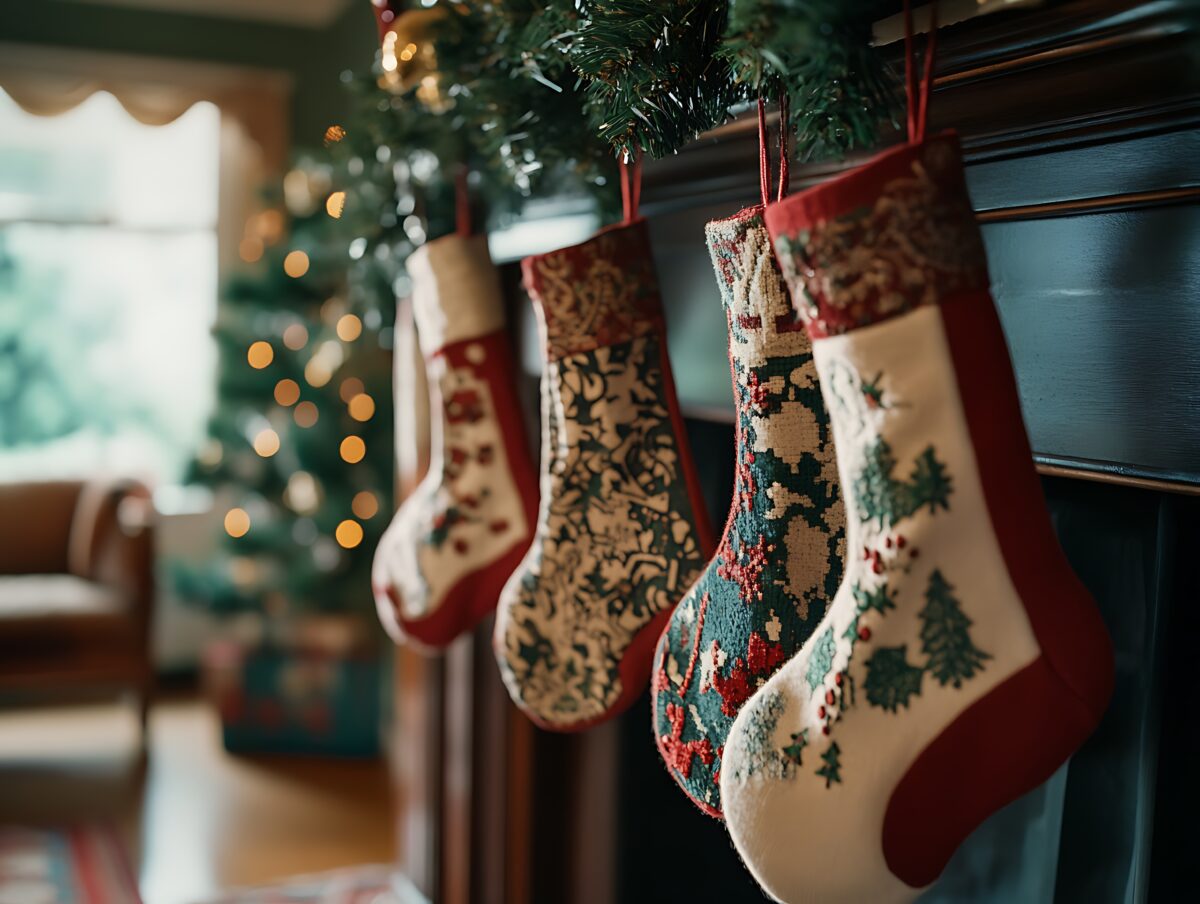
Stockings: Though not greenery, stockings are another beloved Christmas hanging tradition. Legend has it that St. Nicholas left gold coins in the stockings of three sisters, beginning the custom of hanging stockings to receive gifts.
Wreaths: A Symbol of the Christmas Season
The Christmas wreath is more than just a decoration; it’s a link to ancient traditions, a symbol of faith and renewal, and a decoration that radiates a welcoming energy. As you hang your wreath this holiday season, take a moment to reflect on its deeper meanings and the centuries of history that have shaped this traditional decor!
Don’t forget to look around your home to see how other hanging decorations, like mistletoe, garlands, and stockings, add to the magic of the season. Together, they create a beautiful combination of traditions that make Christmas the warm, joyful celebration we know and love.