
Somehow, this year has flown by, and we are nearing the end of 2023. How did that happen? During these final weeks of December, the natural world experiences a significant event that has been an important time of the year for thousands of years. The Winter Solstice. This event takes place on Thursday, December 21st this year.
Since Daylight Savings, the sunsets have been getting earlier and earlier, which is… tough. The Winter Solstice marks the shortest day and the longest night of the year in the Northern Hemisphere. In layman’s terms, it’s only up from here. The Winter Solstice is a momentous event that carries profound cultural, spiritual, and astronomical significance across diverse civilizations. Keep reading to learn more!
Ancient Origins
The Winter Solstice has captivated civilizations for millennia, serving as a focal point for various cultural practices and religious rituals. Ancient societies meticulously observed the movements of the sun, recognizing the solstice’s crucial role in the cycle of seasons. We can see alignments and monuments dedicated to the Winter Solstice in the remains of ancient societies.
One of the earliest recorded celebrations of the this natural event traces back to the Neolithic period, with structures like Newgrange in Ireland, designed to align with the solstice sunrise. The precision of these ancient constructions underscores the significance of this celestial event to our ancestors.

Winter Solstice in Different Cultures
Celtic Traditions
For the Celts, the Solstice marked the festival of Yule, a time of feasting and merriment. Yule logs were burned, symbolizing the return of the sun and the promise of longer days ahead. Druids celebrated this time as the Alban Arthan, meaning “Light of Winter.”
Ancient Rome
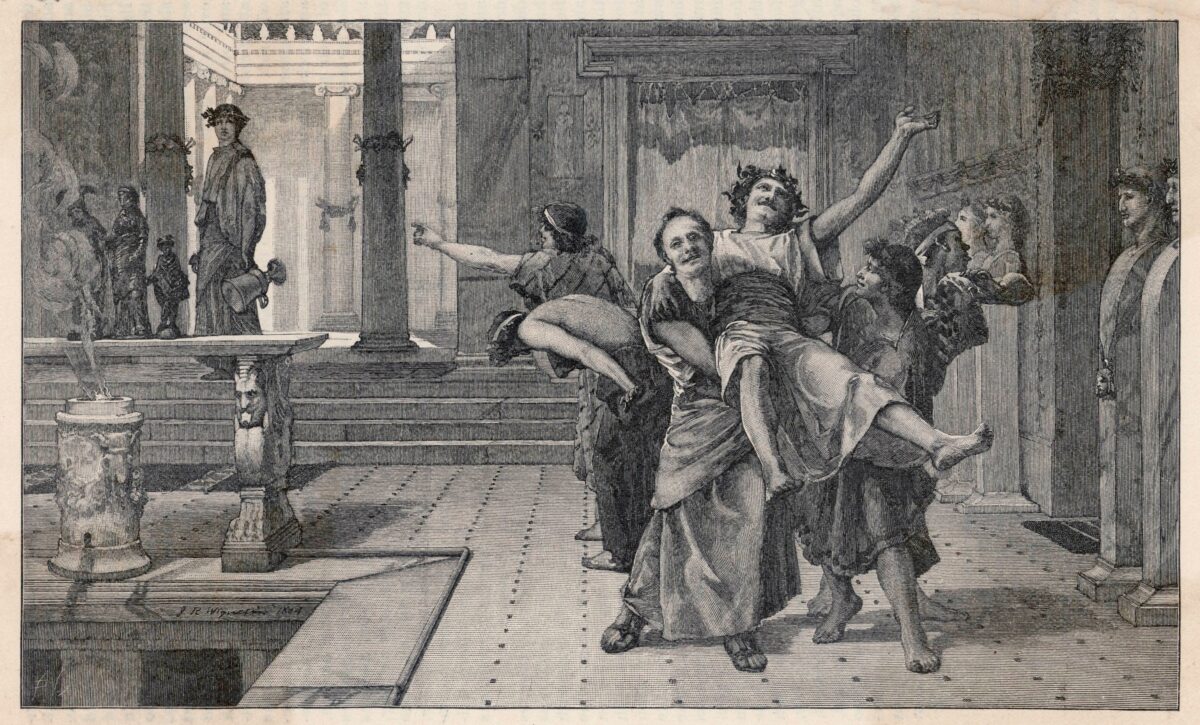
Ancient Romans celebrating Saturnalia
In ancient Rome, the Winter Solstice was commemorated with Saturnalia, a week-long festival honoring the god Saturn. It was a time of revelry, gift-giving, and role reversals where social norms were temporarily upended.
Pagan Festivities
Pagan traditions in various parts of Europe celebrated the solstice through gatherings like the Germanic Yuletide, where the Wild Hunt was believed to roam the skies. Scandinavians honored the Norse god Odin during the festival of Jul (Yule).
Indigenous Traditions
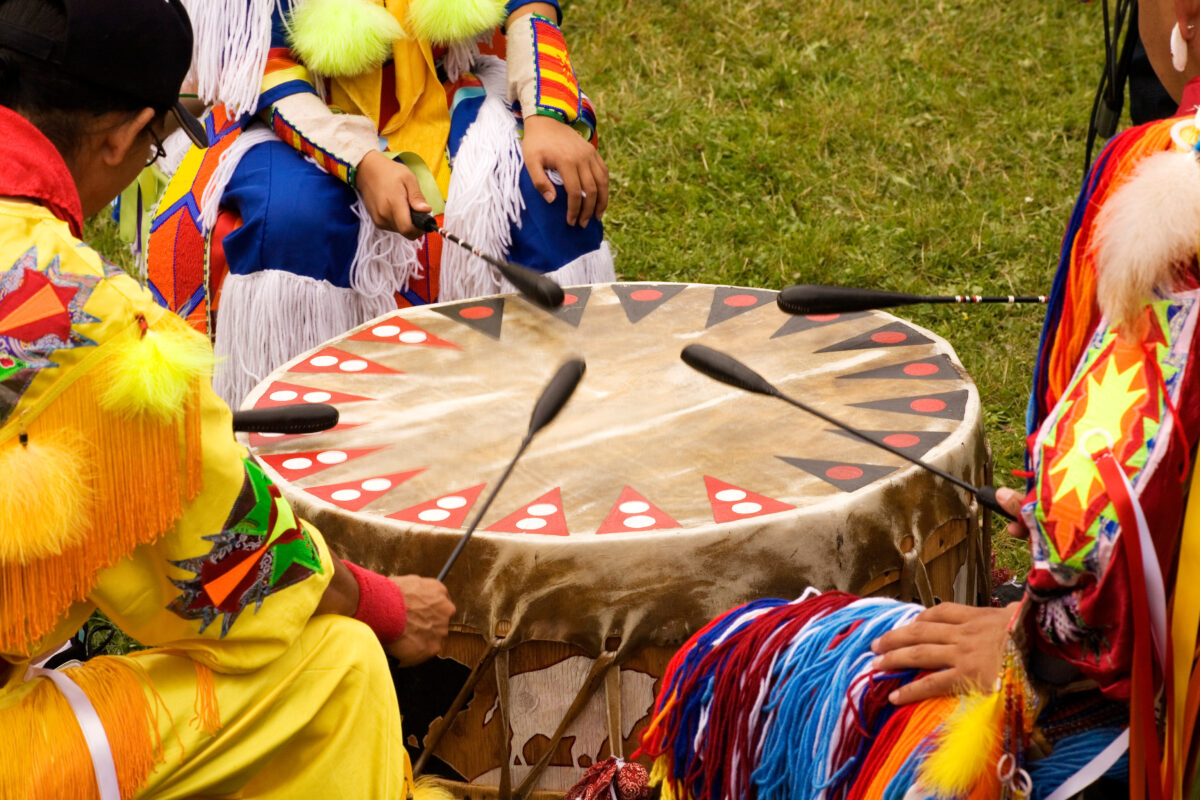
Indigenous cultures, such as the Inuit and various Native American tribes, had ceremonies and rituals tied to the solstice. These often involved storytelling, drumming, and ceremonies to honor the change of seasons and the renewal of life.
Solstice in Modern Times
As time progressed, the Winter Solstice continued to influence customs that evolved into modern-day festivities. Many traditions and symbols associated with this celestial event have been incorporated into religious and secular celebrations worldwide.
Winter Solstice Celebrations
Contemporary pagan and communities observe the Winter Solstice as Yule, emphasizing themes of rebirth, renewal, and the return of light. Rituals involve lighting candles, meditation, and acknowledging the cycles of nature.
Scientific Significance
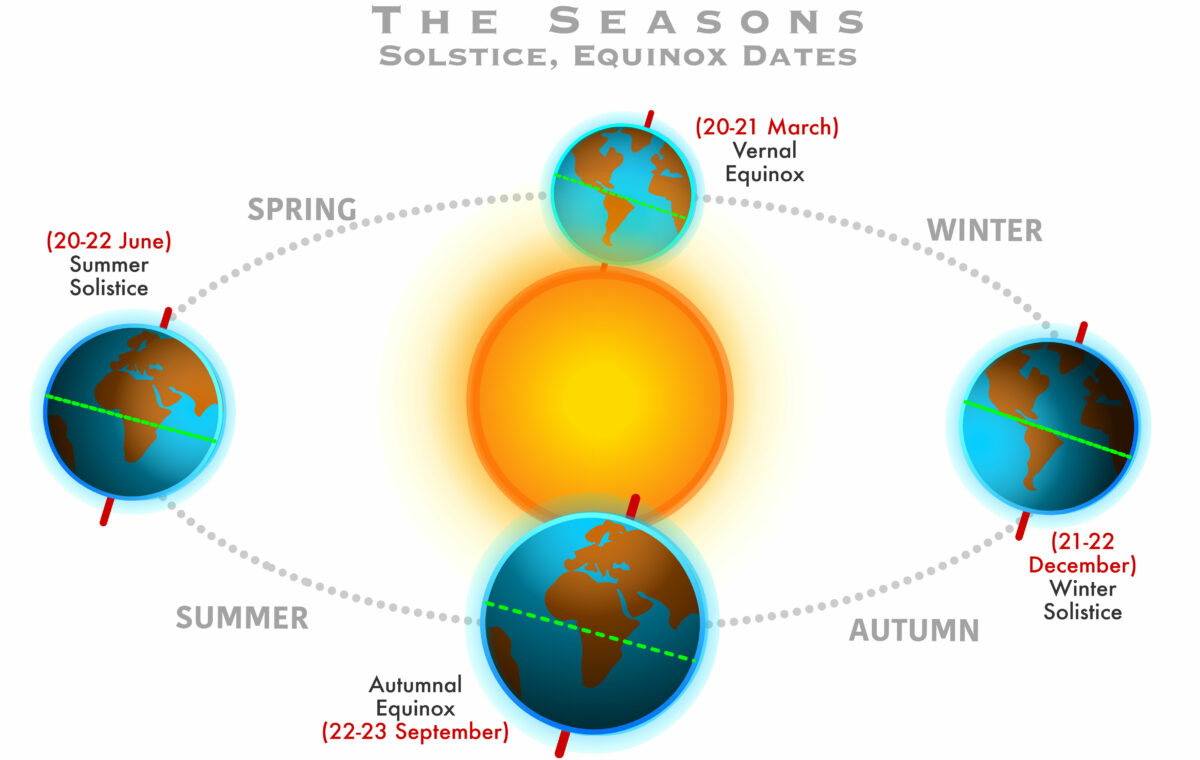
Beyond its cultural and historical importance, the Winter Solstice holds astronomical significance. It marks the point where Earth’s axial tilt is farthest from the sun in the Northern Hemisphere, resulting in the shortest day and longest night. After the solstice, we can look forward to the days only getting longer!
Global Diversity
Across the globe, diverse cultures have developed unique rituals and customs to mark the Winter Solstice. From the Dongzhi Festival in China, celebrating the return of longer daylight hours, to the Inti Raymi festival in Peru honoring the sun god Inti, these celebrations underline the universality of humanity’s eternal connection to nature and the cosmos.
Contemporary Reflection
In our modern, fast-paced world, the Winter Solstice offers an opportunity for reflection. It invites us to pause and reconnect with nature’s rhythms, to appreciate the beauty of seasonal changes, and to celebrate the interconnectedness of all life on Earth. Take a moment to pause on December 21st and connect with the world around you.
All About The Winter Solstice

The Winter Solstice stands as a testament to humanity’s enduring fascination with the cosmos and the cyclical nature of life. Across cultures and civilizations, this celestial event has been revered, commemorated, and integrated into traditions that continue to resonate today. As we mark this annual celestial occurrence, let us embrace its significance, reflecting on the past and looking forward to the promise of new beginnings, warmth, and the return of light.