
Welcoming Back the Hummers!
By Agway’s own, David Christopher.
As the early months of cold and windy nights give way to warmer days of sunshine, a multitude of plants break dormancy and flowering trees and shrubs begin to wake.
The changing season signals the beginning of a new circle of life!
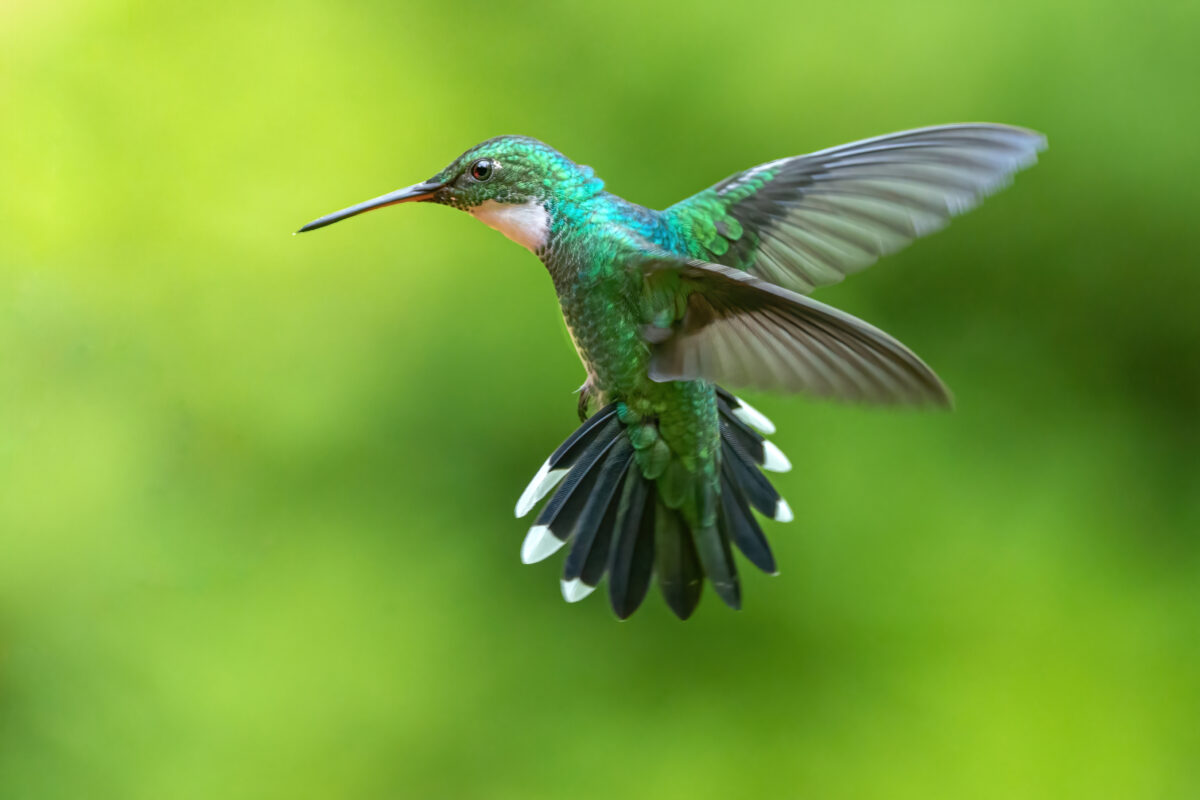
The Great Migration
Weeks earlier in Central America and Mexico, the tiniest of birds began to sense the seasonal changes taking place in the northern hemisphere. During this time of year, male hummingbirds stock up on fuel and typically gain 25-40% of their body weight before starting a long and tiresome journey.
As early as February, thousands of Ruby-throated Hummingbirds begin their migration north. Traveling over the open waters of the Gulf of Mexico rather than following the longer shoreline route, these little birds will fly non-stop up to 500 miles to reach U.S. shores. During migration, a hummingbird’s heart can beat up to 1,260 times a minute, and its wings flap 15 to 80 times a second! It takes approximately 18-22 hours to complete this amazing solitary flight. These migrations are no small feat, and these little birds accomplish it every year.
Male hummingbirds typically arrive in Massachusetts in the first week of May, where they often return to the same feeders and gardens as the previous year. Females arrive a bit later around the end of May and begin the task of building her nest.
Hummingbird Nests
Nests are built on slender, often descending branches, usually of deciduous trees like oak, hornbeam, birch or poplar. Nests are usually 10-40 feet above the ground. The exterior of the nest, which is no bigger than a ping pong ball, is camouflaged with bits of lichen and moss.
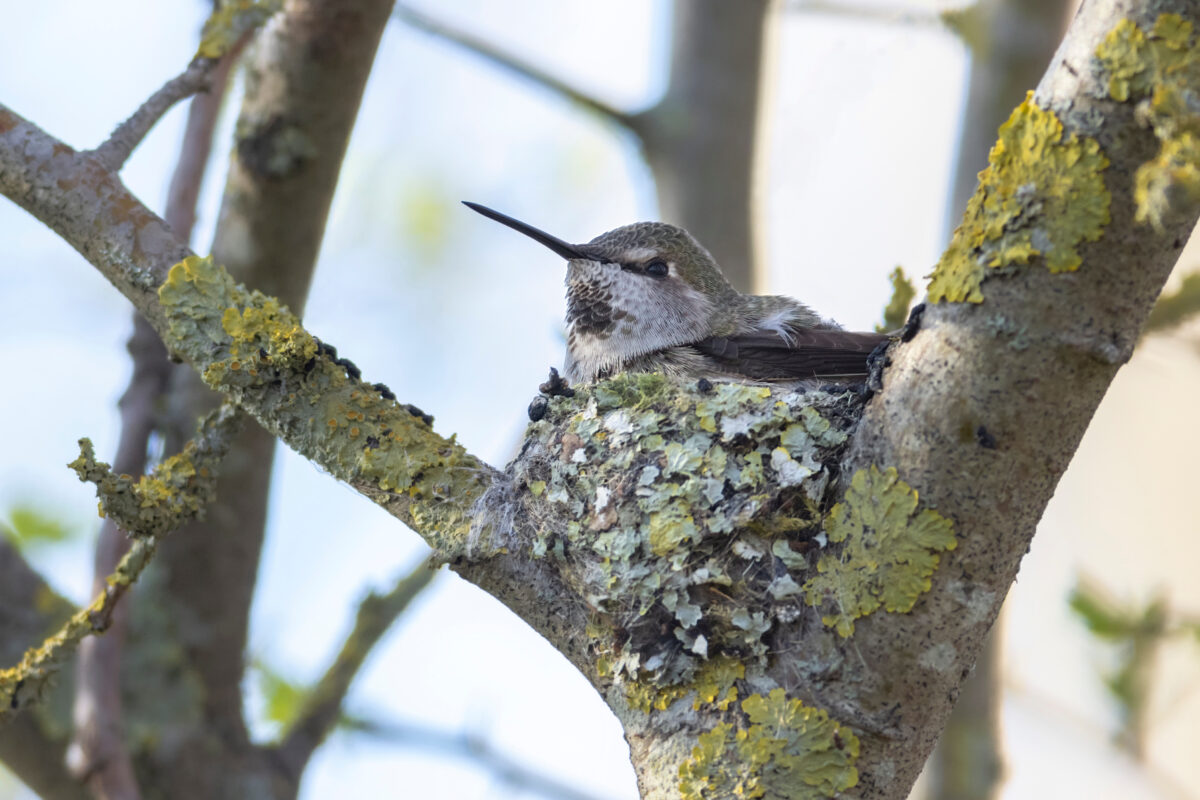
Hummingbird Nest
To a female hummingbird, nothing is more attractive than a strong, brightly colored male!
To prove their virility, males flash their colorful throat feathers, display their tails, stretch their wings and hover in front of females to show off their dazzling colors and poses. The best of these males may mate with multiple females. Female hummingbirds will have between one and three broods. Each brood will typically have two eggs, giving rise to two baby chicks.
It’s still unclear how hummingbird’s know how to navigate 1000s of miles and end up in the same backyard as the previous year. Scientists believe some ways involve following the earths magnetic field, using the sun as a compass or recalling landmarks such as rivers, coastlines, mountain ranges, and even highways as guidance.
Bring Hummingbirds to Your Home
A hummingbird visits from 1,000 to 2,000 flowers in one day to collect nectar! Flowering meadows and gardens are among the primary feeding grounds for hummingbirds.
Being prepared for your own hummers arrival is helpful to guaranteeing their return. Bleeding hearts, phlox, columnbine, coral bells, forget-me-not, flowering cherries and other early spring blooming trees and shrubs all are garden plants you can be growing to help out their ravenous appetites.
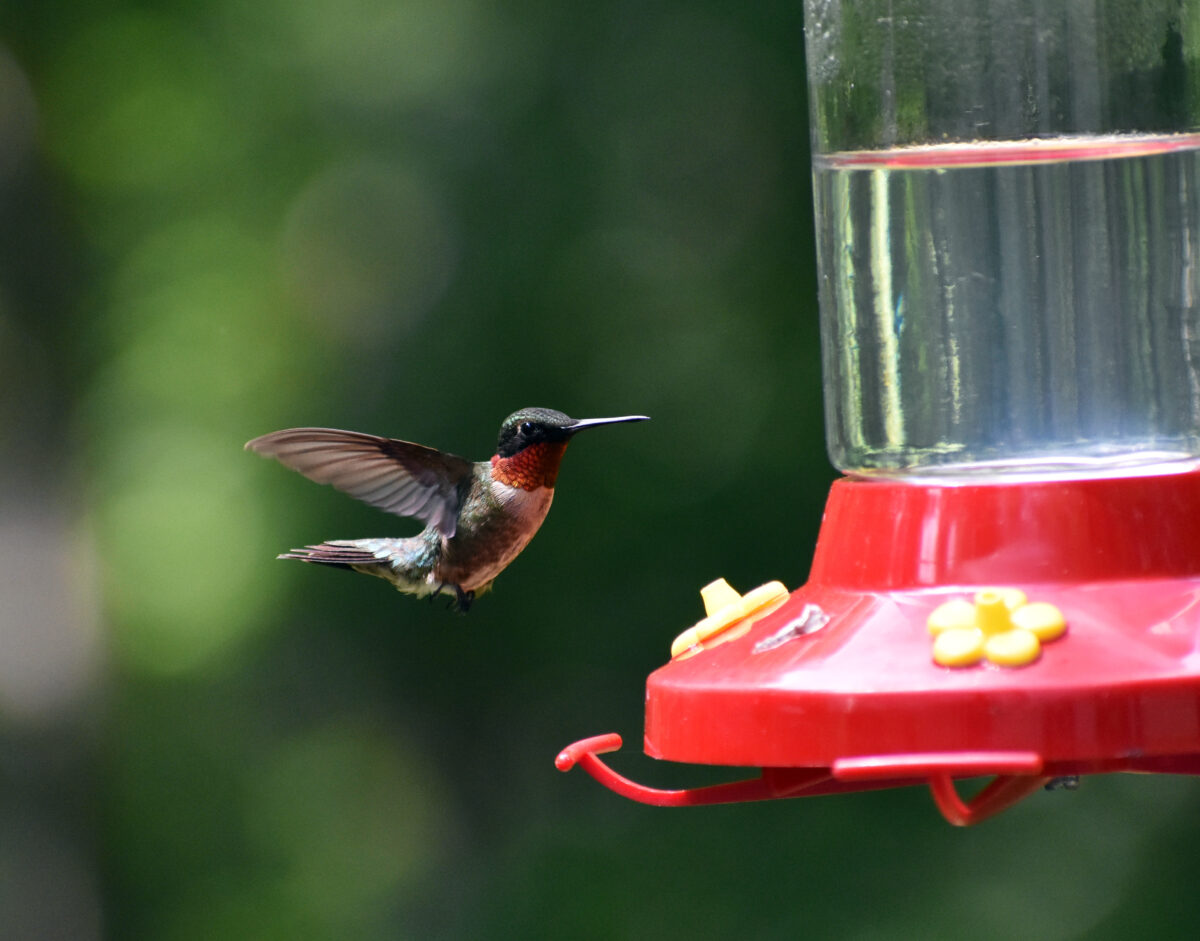
To attract these beautiful birds to your yard, put out hummingbird feeders with sugary water starting in May. Creating a simple three season hummingbird garden can be effective in attracting hummingbirds, bees, and butterflies all season long while also adding layers of beauty to your home.
A simple garden includes a collection of trumpet shaped flowers. Ruby-throated hummingbirds feed on the nectar of red or orange tubular flowers such as trumpet creeper, cardinal flower, honeysuckle, red salvia and bee-balm. Planning plants that bloom at different times of the season are guaranteed ways to attract hummingbirds to your home.
Using Colors to Attract Hummingbirds
What is it about hummingbirds and the color red?
Turns out hummingbirds have heightened sensitivity to the yellow and red end of the color spectrum, with blues appearing duller to them. Therefore, the bright, warm colors stand out more. What’s more, red flowers are often rich sources of food for hummingbirds and the color red often signals high-octane fuel for their intensely active way of life.
Some Interesting Facts About Hummingbirds:
• The ruby-throated hummingbird can fly approximately 1,370 miles without taking a break!
• Hummingbirds are interesting to watch during breeding due to male courtship dances with loops and deep dives that can reach speeds of 50 mph.
• A hummingbirds nest is held together with strands of spider silk and sometimes pine resin.
• A newly hatched baby hummingbird is about the size of a jellybean.
• The smallest species of hummingbird is the bee hummingbird living only in Cuba and measuring 2 1/4″ long.
• Hummingbirds have a great memory – they remember every flower & feeder they’ve been to, and how long it will take a flower to refill. Not bad since a hummers brain is no bigger than a grain of rice!
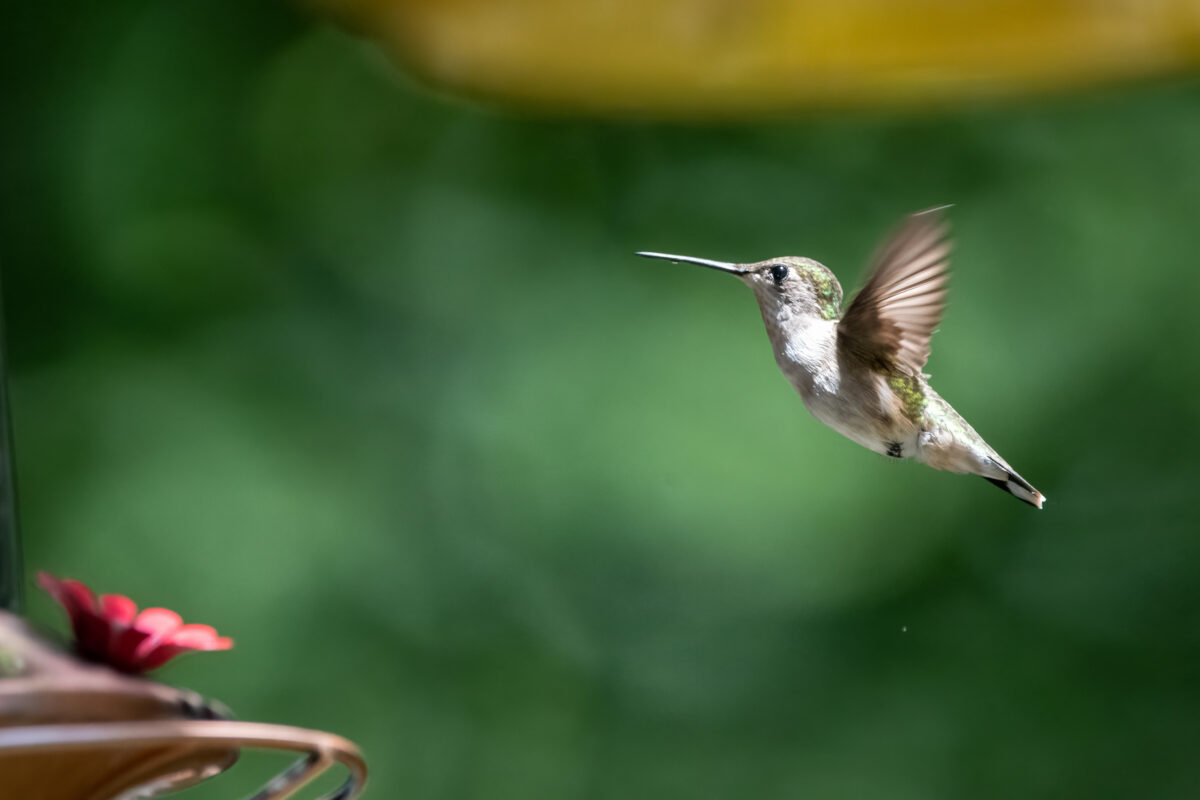
Hummingbird Season on the Cape
Along with many exciting changes taking place as we transition from our dull winter months to our picture-perfect bright months is the return of hummingbirds to our shores. These small but mighty birds signify summer for many of us here on the Cape, and all of us at Agway will be keeping an eye out for the hummers in the coming weeks! Prepare your backyard, keep your ears peeled, and make room for these adorable critters to join us for the most beautiful time of year.