
Have you ever found yourself walking the neighborhood or strolling the sidewalks in town when you’re suddenly overwhelmed with the smell of something unexpectedly sweet in the air? Your immediate reaction is likely to locate the source of that scent and to find out where it’s coming from.
Smells and scents play a powerful role in awakening our sensory emotions!

How Scents Affect Us
It’s no secret that scents of fragrant plants can relax your body, calm your nerves, and make you feel good. These same scents can also reduce tension and anxiety.
The aroma of herbal teas made with lemon or lavender is known to help calm the body by triggering chemical reactions in the nervous system. These chemicals stimulate activity in the brain, which influences brain cell transmission and produces a calming effect.
Aromatic plants also contain essential oils that are used in many industries for their flavor and fragrance. They have long been used in cooking and making sachets, bouquets, and bath oils. Essential oils have taken center stage in recent years as a tool to help with meditation and spa-like experiences.
Scents and Memories
Sometimes, the way we remember a time, a place, or a feeling is heavily is associated with a smell. Plants can have a scent that repels us or lifts us up.
The pine needles being crushed underfoot on a wooded trail or the sweet and earthy smell of cedar you brush against while making your way through a narrow path, create odors that infuse the senses and imprint a memory that will long be relived. The smell of flowers on the warm summer days that you enjoyed as a kid will always have a special place in your heart.

And then, of course, there are the stinky smells. The pungent smell of skunk cabbage walking along a swampy trail is unmistakable.
A Brief History of Plants & Their Aromas
Some of the oldest recipes for aromatic and fragrant plants date back to 1550 B.C. When it comes to plants and the history of plants, it seems that we’re always turning back the clock to Ancient Egypt!
Written down by Egyptian priests in the Ebers Papyrus, a compilation of medical texts. Medicinal plants and herbs were grown in botanical gardens behind walled off temple retreats.
By the 5th century B.C., Greek physicians brought back information from Egypt of the aromatic and medicinal properties of plants. It was Hippocrates, known as the father of medicine, who was credited with providing many aromatic uses with plants.
By 4th century B.C., in honor of many of their Gods, the Greeks were now establishing their own flower gardens.
Taking inspiration from the ancient gardens of Persia, where the most scented gardens in history stood in the Hanging Gardens of Babylon, they incorporated many of the Persian features, including fragrant trees, fruit trees, and herbs.
Soon after, the Romans began to construct Villa Gardens with places of relaxation among fragrant plants. They spread their knowledge throughout the Roman Empire and new designs emerged focused on water features and orchards.
Herb gardens were split into the ‘physics’ garden, full of healing herbs and plants and the ‘kitchen’ garden, herbs grown for their use in the kitchen. Many of todays well known plants were introduced to Great Britain by the Romans. These include peach, fennel, parsley, sage, thyme and rosemary.
Why Do Plants Have Different Smells?
Our olfactory receptors are directly connected to the limbic system, the most primitive part of our brain.
It’s here where the root of emotions are processed and managed. Smells can stimulate a vast array of feelings and responses or pain and pleasure to any given situation.
For plants, smell is a vital form of communication. Their scents are a combination of complex chemicals that evaporate and float through the air to seduce pollinators or to deter pests, leaving humans as mere bystanders of their diverse fragrances.
While the flowers of different species might appear similar in color or shape, no two plants produce exactly the same scent. When it comes to defining an ‘attractive’ smell, plants use wildly different methods of enticement to invite specific pollinators to their door.

The pleasure we receive from the delicate aroma of a rose or the herbal scent of rosemary, is not for human benefit, but a vital form of communication to a plants survival. It’s these aromas that draw the pollinators necessary for the plants reproduction. Sweet floral smells, like the fragrance of a rose or lily, are designed to attract pollinators that are drawn to a sugary aroma, such as bumblebees, honeybees, and many butterfly species. These scents are produced in the petals of a flower, combining with shape and color to signal an attractive destination for hungry pollinators.
Not all pollinators have the same taste! Some are drawn to odors that imitate the smell of rotting flesh and dung, an environment that flies and beetles tend to feed and breed in. The Titan Arum, also known as the smelliest plant on Earth, is a prime candidate for these pollinators. Dubbed the ‘Corpse fFower’, it imitates a dead animal by releasing a foul, putrid odor which, combined with its dark burgundy interior, lures flesh-hungry pollinators towards its female flowers.
Similarly, the Bradford pear tree, releases a surprisingly fishy smell to attract flies as its necessary pollinator.
The Scents of Herbs
The invigorating smell of herbal plants such as rosemary, lavender, or mint reveals another side to the world of plant scents. Some common herbs, such as basil, mint, and lavender contain essential oils secreted by glandular hairs on the surface of their leaves. The hairs swell like a balloon as the oils build up, releasing a scent when the leaves are touched or disturbed by the wind.
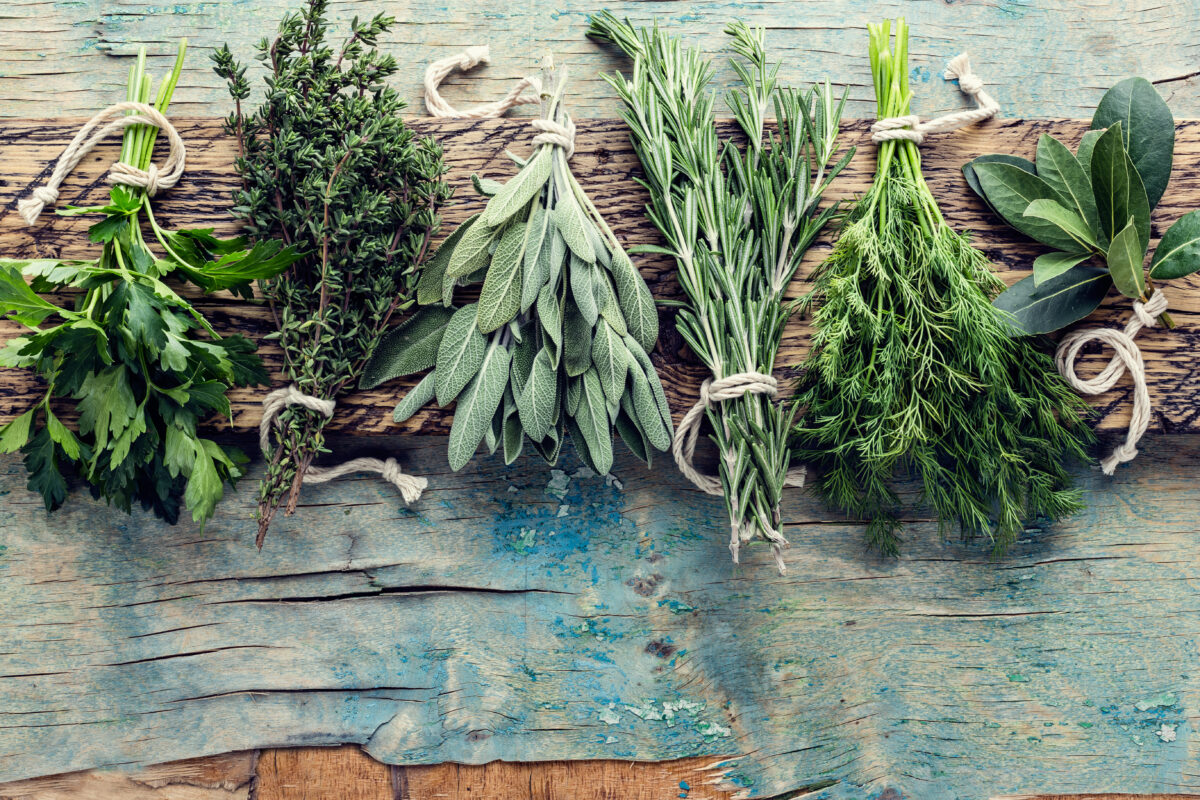
The minty, oily or sharp smells produced when you crush a leaf or stem also play a defensive role against some predators. The strong bitter scent works to deter pests like aphids, slugs or even bigger animals. For example, rosemary, sage and thyme are believed to repel some species of rabbit, while plants like garlic can repel squirrels.
How To Create Your Aromatic Garden
Creating an aromatic garden to your space should be unique to you since fragrances affect each individual differently. Your aromatic garden should be your ‘scratch and sniff’ place that brings you contentment and a beautiful touch to your outdoor space.
The plants you choose should be personally pleasing, uplifting and filled with all the fragrances that recharge your battery, calm your nerves and bring back memories in the years to come. Have fun smelling and selecting your favorite plants for your aromatic garden! There’s nothing better than having a garden or a yard that radiates beautiful scents every day.
SOME FUN SMELLY FACTS
* A study conducted by researchers from the Karolinska Institute in Sweden and the University of Oxford has found that vanilla is the world’s most universally loved scent.
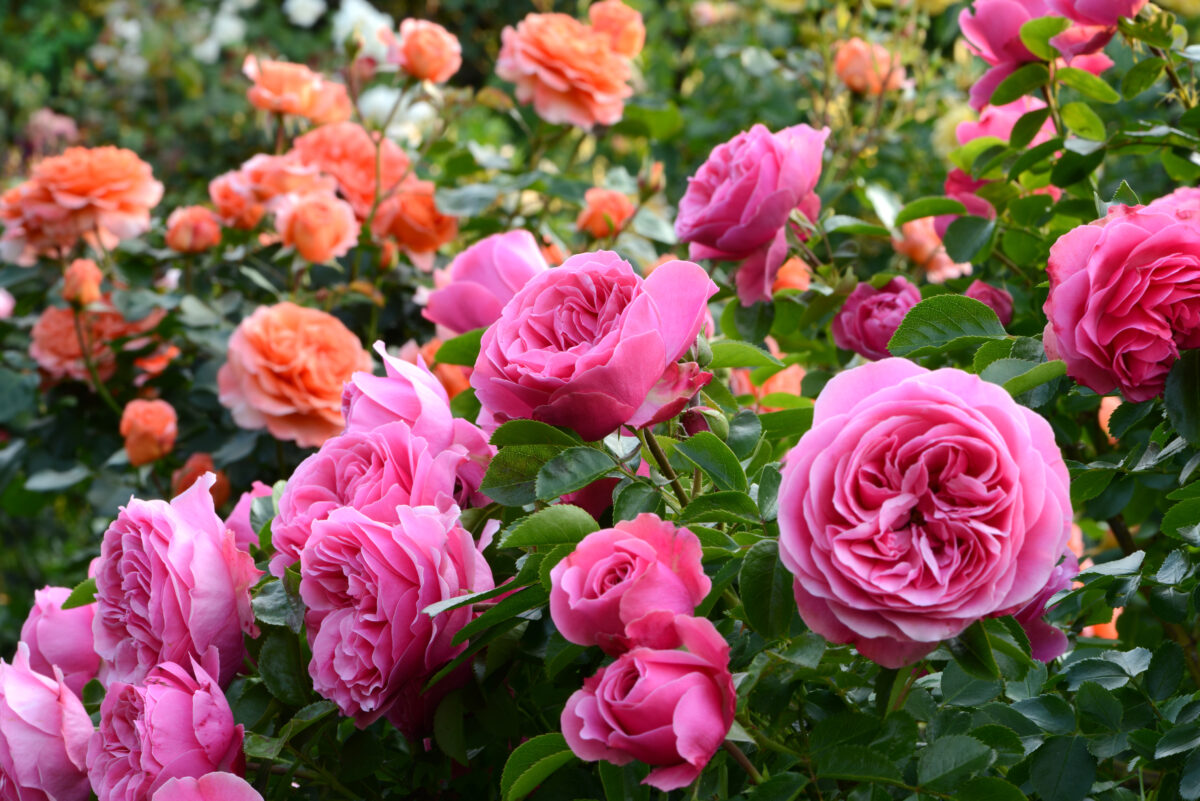
• There are more than 400 identified chemical fragrances found in roses and that list still grows today!
• The most fragrant flowers are white and pastel, while bright flowers, like red and orange, have little to no scent.
• Standing up to 12 ft tall, the Corpse Flower blooms once every seven to nine years, and when its huge flower (which looks quite a lot like raw meat) opens, it emits a stench of death and rotten meat. The bloom only lasts for 24 to 36 hours before withering, after which the plant goes back to storing energy in its enormous corm for the next stinky bloom.
* Jasmine is known as the “king of flowers” and has a heady, spicy, slightly sweet, and fruity scent. In different cultures it is synonymous with love, romance, weddings, passion, seduction and beauty.
* The roots of iris plants are dried and then treated with solvents to extract orris butter, an oily substance that adds a floral note to many perfumes.
-David Christopher