
by Agway’s own, David Christopher
Grafting is a quick and reliable means of reproducing plants by using a technique that joins two plants into one. It is often done with trees and shrubs to combine the best characteristics of two plants.

In general, a wound is created on one of the plants, and the other is inserted into that wound so each plant’s tissues can grow together. The wound needs to be protected until it heals to prevent pests and diseases from entering the graft.
The practice of grafting can be traced back 4000 years to ancient China and Mesopotamia, with some scientists saying that grafting techniques were likely used in China before 2000 BC.
Writings in early Chinese books discovered that the art of Chinese ancient grafting was enlightened by the phenomenon of two branches of different trees twined together in nature.
Early experimentation discovered many factors impacted the success and survival rate of grafting. Best grafting results were obtained when plant species of close relation were joined together over plants from a different genus.
Understanding How Grafting Works
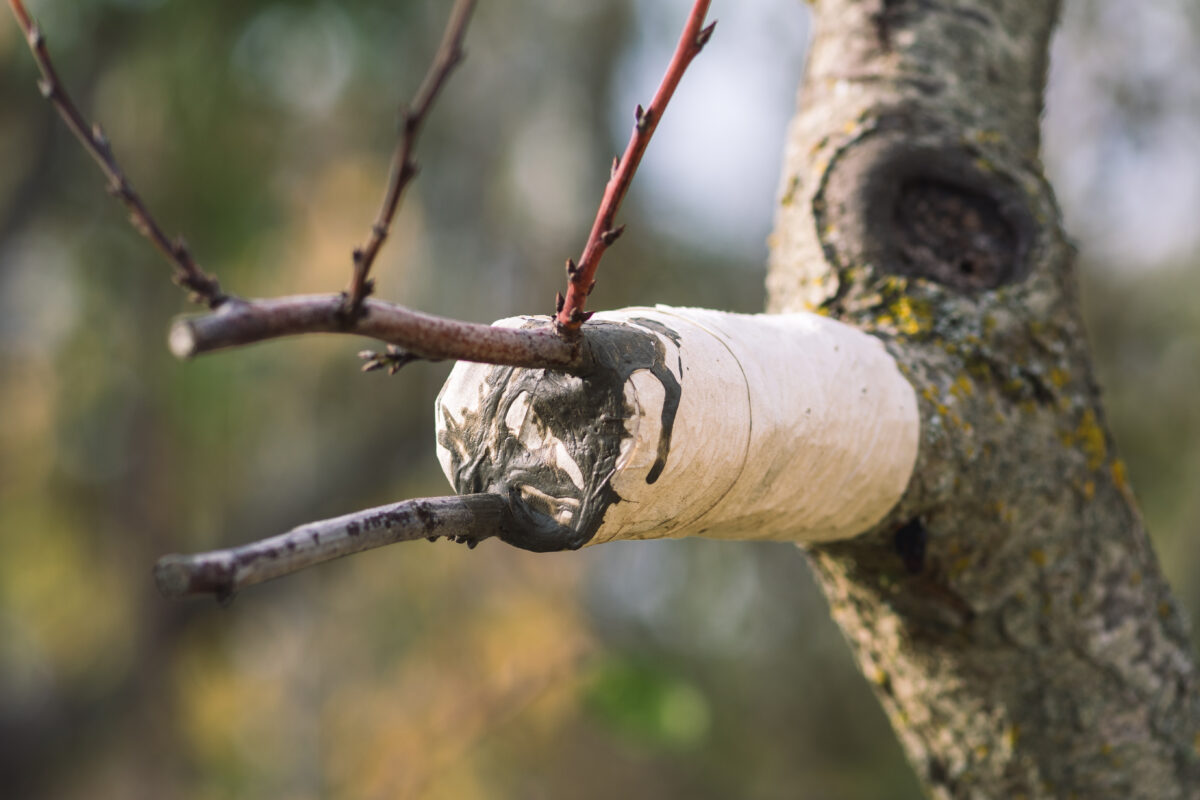
Grafted plants use the roots and the bottom portion of one plant (rootstock) and attach it to a tender shoot (scion) from the top portion of another plant.
The rootstock is usually a healthy root system and some portion of the stem.
The scion is a young shoot or bud from a plant with beneficial characteristics like great flavor, color, or disease resistance. All of the top growth of a grafted plant, such as the leaves, flowers, and fruits, comes from the scion.
For successful grafting to take place, the vascular tissues of the two plants must be aligned and in tight contact with one another. The grafted plant must be kept alive until the graft has “taken.” This usually occurs within one to two weeks. This period of time is called the healing period.
The rootstock and scion do not have to be from the same species, but they should be closely related. For example, it would not work well to graft a plum tree onto a peach rootstock because they are incompatible.
It is also possible to graft several scions onto one rootstock, as they do for apple trees that produce multiple varieties on different branches.
Why Should We Graft Plants?
The simple answer? Grafting can fend off insects and diseases and make a stronger plant that improves crop abundance. Grafting plants and trees opens up a world of possibilities to develop new varieties.

Grafting also gives the opportunity to create dwarf versions of a tree and makes it easier to harvest its fruit. This also creates a better option for planting in a home garden.
Besides dwarfing, rootstocks contribute traits to improve yield, cold, or drought hardiness, and even disease and insect resistance.
As an example, in the early 1800’s, some French winegrowers used North American rootstock that was discovered to have a resistance to phylloxera, a pest that can be fatal to vines!
Likewise, grafting heirloom tomatoes combines old-world tomato flavor with increased disease resistance and productivity.
Which Types of Plants Can be Grafted?

There are many types of plants and trees that can be grafted including fruit trees such as apple, cherry, and citrus, and other trees like birch, beech, ash, spruce, and cedar varieties.
Flowering and vegetable plants can also be grafted. Roses and tomatoes are commonly grafted plants.
Grafting Techniques
Several methods and types of grafting techniques are practiced, each requiring different tools, seasons, and expertise. It also depends on the grower’s preferred type of cut and how well the cuts interlock and thrive.

The Most Common Grafting Techniques
Cleft grafting: A horizontal incision is made and one or two scions are inserted in the split.
Inlay grafting: A V-shaped notch is made in the rootstock for fastening a scion.
Four-flap or banana grafting: Four vertical cuts on rootstock bark are made to accept the scion, which also has four vertical cuts on its bark. All the flaps are held together with a rubber band.
Crown grafting: Vertical incisions are made between the bark layer and the wood of the rootstock that accept a flattened, or chiseled part of the scion.
The Budding Technique
A modern form of grafting which is showing a high success rate is known as budding.
A bud is inserted into a small incision rather than using a scion with numerous buds. Most all fruit trees are now grafted using the budding technique.
Budding is mainly used for growing fruits, nuts, and ornamental trees. It’s faster than grafting, and it forms a stronger union than other grafting techniques.
In spite of its advantages, there can be some problems associated with grafting. Incompatibility is most noted and the end result can be a reduction in yield, poor fruit quality and low flower formation. Additional costs must also be factored in.
The practice of grafting plants should be done only after the benefits and risks of grafted seedlings have been fully understood.
Fun Facts About Grafting
* India’s Kaleem Ullah Khan, known informally as the ‘Mango Man’ succeeded in grafting 315 varieties of mango onto a single tree!
* Braeburns, Galas, Pink Ladies, Sweetangos, Honeycrisps, Fujis and other familiar edible apples are the result of grafted trees.
* The Tree of 40 Fruit, also known as the Franken-Tree, is a grafted fruit tree that can produce 40 different types of fruit.
* A plant that produces both tomatoes and potatoes, called the TomTato, has been developed for the UK market. In this case, the tomato plant is grafted to the potato base.
* Hush Heath Estate in Kent, one of England’s top premium wine producers, is grafting grape vines to their own apple trees. The tree, formally called the GRAPPLE, saves both space and time in being able to harvest the fruit together.
* The upper part of a tree rose is the shoot of a shrub or tea type variety grafted to a straightened rootstock of a climbing or rambling variety.
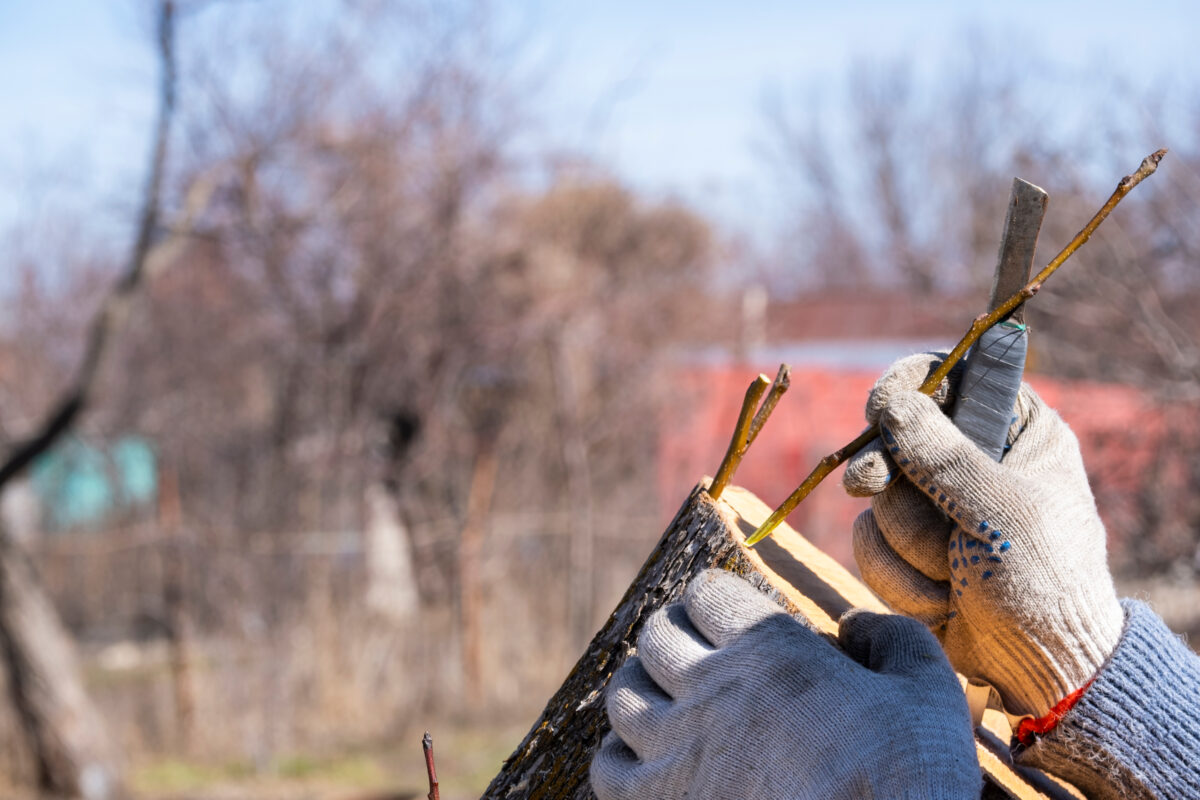
Grafting is an important part of our produce ecosystem and helps us keep plants at their fullest and healthiest! We are grateful for all of the fruit and vegetable variations that have come from this growth strategy as well. Some of your favorite fruits may be the result of grafted trees! Do you love honeycrisp apples as much as we do? Start your garden with Agway!