
Planet Earth’s 4.5 billion year history has experienced many significant atmospheric and climatic changes that have profoundly impacted the evolution of life. At Agway, we’re always taking deep dives into the history and future of the environment around us. One of the most interesting and impressive evolutions is the evolution of plants!
The Evolution of Plants
The history of plants dates back 460 million years. Plant evolution has played a crucial role in shaping the Earth’s atmosphere through oxygen production and carbon removal. This photosynthetic process allowed for the evolution of animal life…and, eventually, animal and human existence today.

Without the ability of plants to sustain these atmospheric conditions, life as we know it could no longer endure!
Plants have historically risen to the challenges of environmental changes over the millions of years of existence by natural selection and evolving new developmental and metabolic traits. These adaptive traits help plants to thrive in diverse growth conditions while benefiting humanity through the production of food, raw materials, and medicines.
The Challenges of Climate Change
Today, we live in an age where climate changes are happening faster than nature can keep up with.
The current rapid rate of climate change caused by both natural means and human activities presents unprecedented new challenges to the future of all plants.
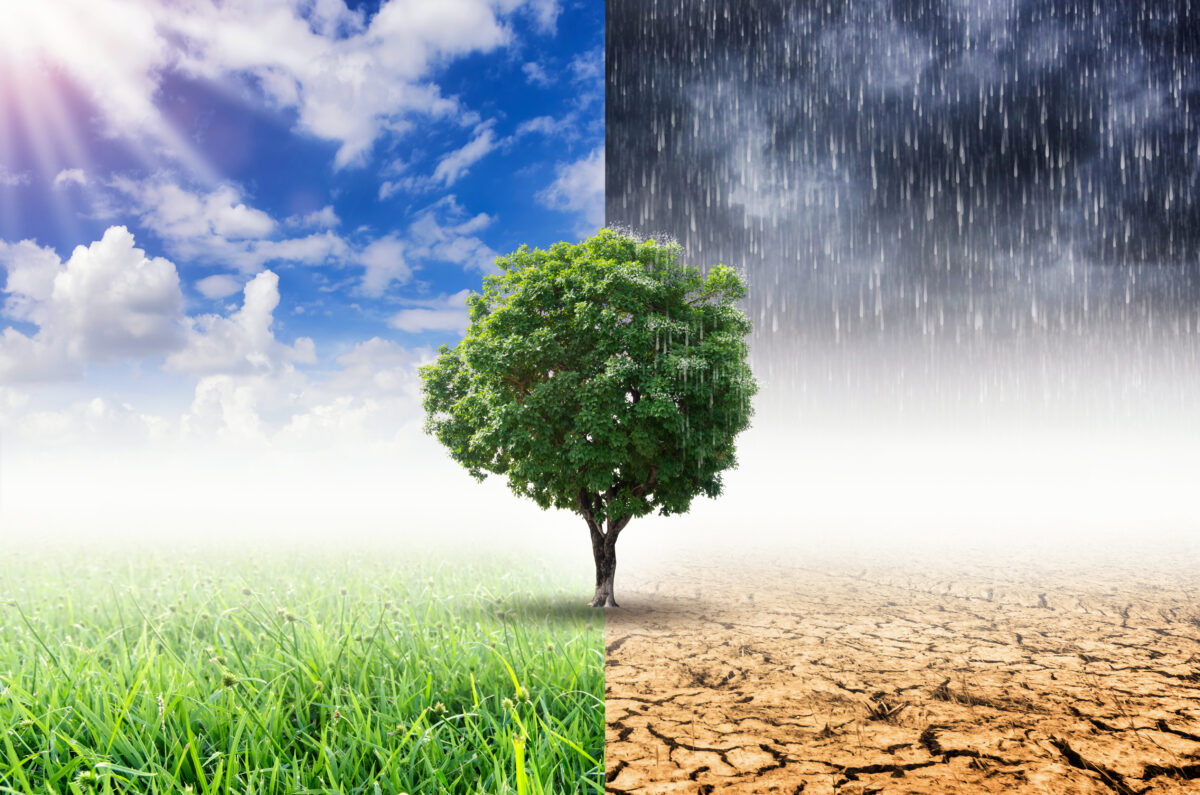
Plants (mainly trees) dominate life on Earth, accounting for more than 82% of biomass (total mass of all living things on Earth)! We humans must rely on plants for our basic existence. From generating the air we breathe and the food we eat to supplying the raw material for the roofs over our heads and the clothes on our backs….plants and plant products are a necessity.
The Ecosystems of Plants
But as human population grows, a battle for living space ensues, and plants are losing their ecosystems.
At the same time, since the pre-industrial era, the concentration of carbon dioxide in the atmosphere is steadily increasing, primarily due to human activities like burning fossil fuels, and this increase is considered a significant factor in climate change.
So how might plants adapt? What might the future evolution of plants look like?

Plant Adaptability
* Adaptations like drought tolerance might lead plants to produce deeper root systems, thicker cuticles to reduce water loss, and mechanisms to store water more efficiently.
* Heat resistance might create plants with reflective leaf surfaces and altered photosynthetic pathways to minimize heat stress.
* Flooding environments might produce plants with specialized root structures to survive in waterlogged conditions.
* Plants may shift their flowering time, blooming earlier or later depending on changing temperature patterns.

* Growth cycles will likely be affected with faster or slower growth rates meant to adapt to changing environmental conditions.
* Natural genetic selection may produce plants with extra sets of chromosomes, potentially leading to a greater adaptability to surviving in harsher environments.
Man’s Intervention
The future of plants is closely tied to human efforts to ensure their continued role in a healthy planet.
Scientists are actively working to develop sustainable practices that can modify specific genes in plants and introduce desirable traits like pest resistance, improved nutritional value, or drought tolerance, much faster than nature alone can do.

* Human intervention will inevitably continue to genetically modify plants for agricultural needs.
• Crop breeding will select plants with desired traits like higher yields and disease resistance.
* Genetic modification could lead to crops with higher levels of essential vitamins and minerals to combat malnutrition.
• Plants have a vital role in absorbing carbon dioxide from the atmosphere, and research is focused on maximizing this ability.
Exactly how plants will cope with accelerating human demands and rapid climate change is uncertain.But according to current scientific understanding, plants will continue to have a significant future! Plants evolved on Earth long before man did and will inevitably continue to thrive long after mankind has gone extinct!
But for man, things are different.
Much of our own survival will depend on how mankind deals with the growing global population and increasing demand for resources.
Humans absolutely need plants to survive in the future, as they provide the oxygen we breathe, the food we eat, the medicines we take and many essential materials for shelter and clothing.
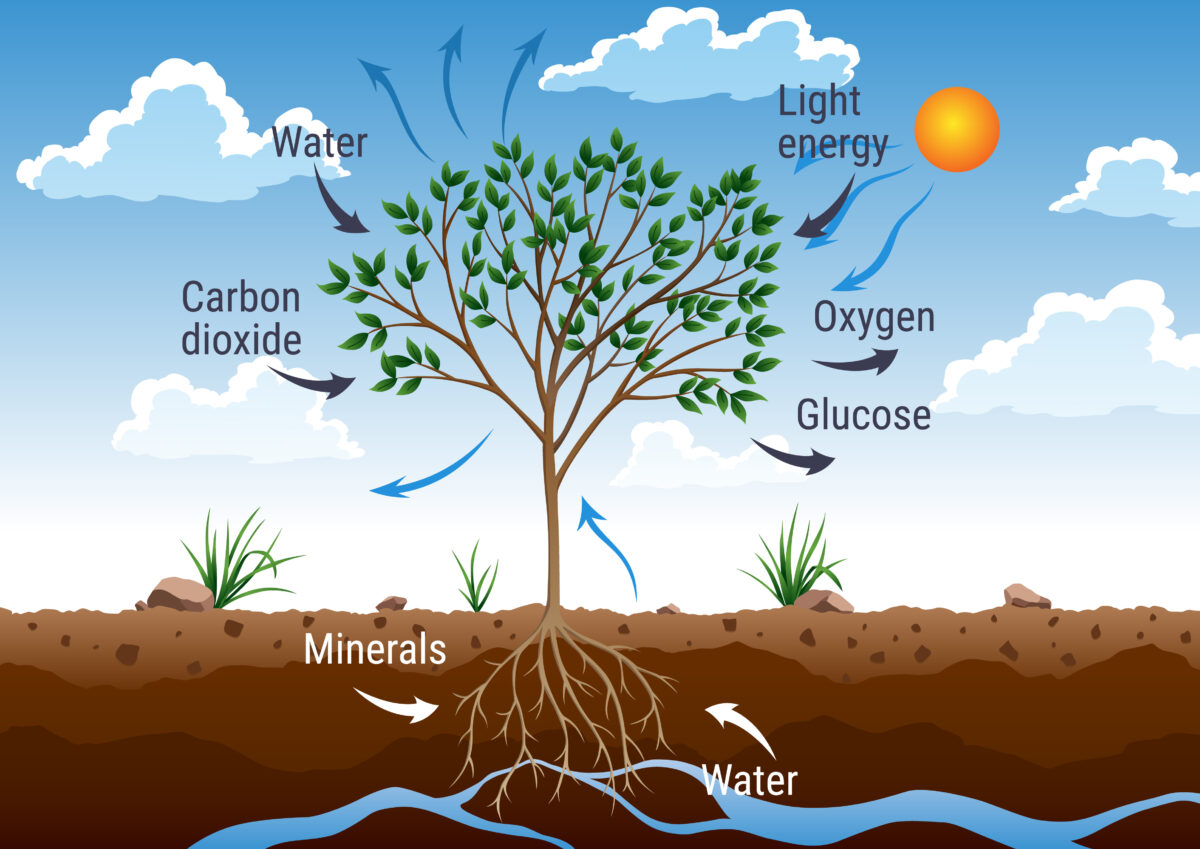
Plants are a fundamental component of our ecosystem and survival on Earth…. because without plants, human life as we know it would not be possible.
Some Interesting Facts
• Humans account for just 0.01% of the total biomass on Earth with Plants topping the chart at 82.4%, Bacteria 12.8%, Fungi 2.2%, Micro and Single cell organisms 2.0%, Animals 0.46% and Viruses 0.04%.
• If all plants were to vanish on Earth at once, it would still take around 3,000 years for oxygen to run out.
* Without plants, the natural food chain would crumble, as all herbivores would have nothing left to eat.
• A 2015 study found that there are roughly 3.04 trillion trees on Earth. The same study also found that the world is losing more than 15 billion trees per year, and only 10 billion of those are regrown. At this rate, Earth’s last tree will fall in roughly 200 years!

Our Takeaway
To sum it all up, the future of plants is intertwined with the fate of humanity and the health of our planet. Plants have demonstrated remarkable resilience and adaptability throughout Earth’s history, evolving in response to environmental challenges over millions of years. However, the current (and relatively unnatural) speed of current climate change and human-induced pressures have created a noticeable “hump” in their evolution.
Plants are the foundation of life, providing the air we breathe, the food we eat, and the materials we depend on. Protecting and nurturing them is not just a good thing to do for the environment, it is essential for our survival and the legacy we leave for generation to come. Let’s step into the new year with a refreshed perspective on the vitality of plants in our ecosystem and an appreciation for their incredible evolution over time.
-David Christopher of Agway