
Can you guess what we’re talking about in this week’s blog? We’ll give you some hints…
1. They’re believed to be at least 4 billion years old, almost as old as Earth itself.
2. They’re considered the smallest organisms on earth.
3. They require a host cell to reproduce.
4. They can be found in almost every habitat, including the air and the ocean.
5. It’s believed there are enough of them to assign one to every star in the universe… 100 million times over!
6. They can not be killed because they are not alive in the first place.
We’re talking about viruses!

Viruses
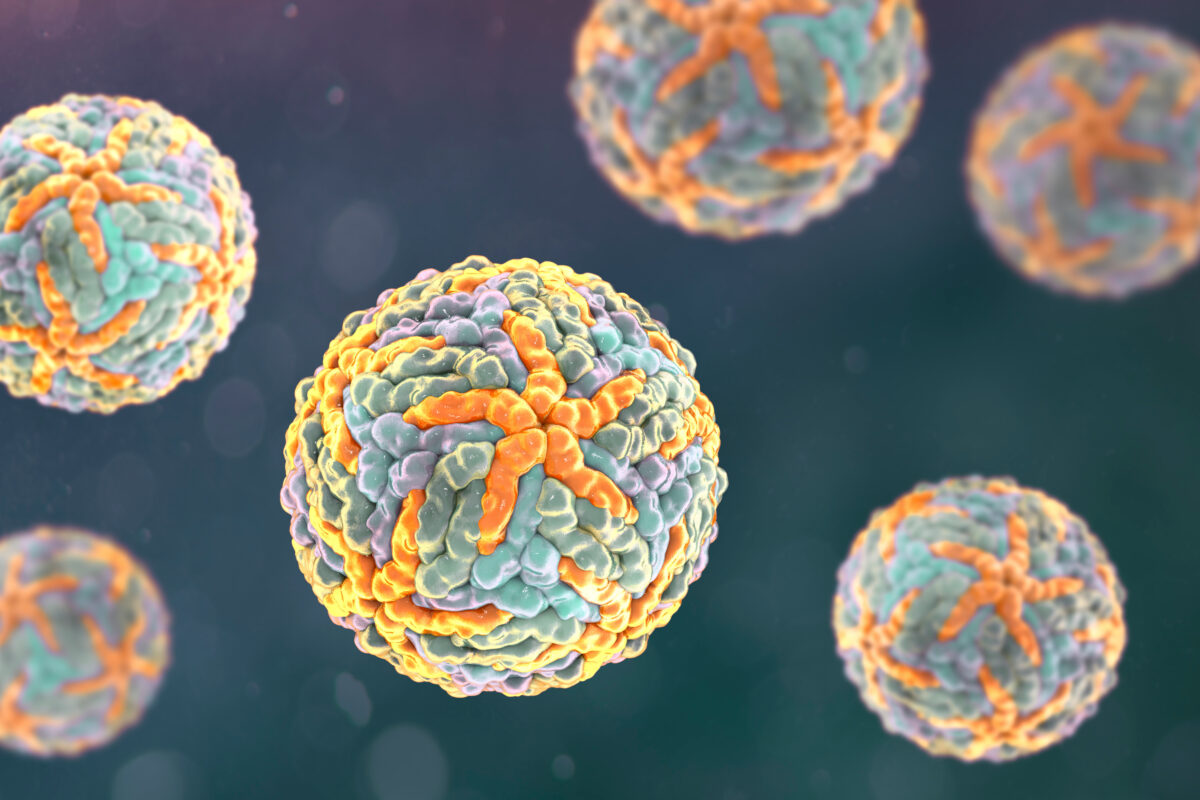
Viruses are found in every living organism from bacteria to humans. They are present in virtually every ecosystem on Earth and can affect all life forms, including plants, animals, and microorganisms. Viruses do not eat food, metabolize, or reproduce on their own and are not considered to be living organisms.
If viruses aren’t living than what are they? Viruses are just bits of DNA inside a protein shell.
It may shock you to learn that viruses don’t really do anything. They are essentially inactive until they come into contact with a host cell. But as soon as that happens, they switch on and come to life!
Plants and Viruses
It all may start with a simple bug bite. The virus only has to reach a single cell to initiate infection. Once in there, presumably from the bug bite, the viral DNA begins to alter the cell structure….and comes alive!
Eventually, offspring viruses are released to take over neighboring cells and the cycle will repeat itself. Soon the virus will be able to reach the vascular system in the plant and spread long distances from the initial spot of infection, infecting everything from roots to young leaves. It’s at this point that plant cells are no longer in control and essentially in a zombie state.

Early signs of infection include plant discoloration and distortion of leaves, shoots, stems and flowers. But the plant rarely dies at this stage! Cellular DNA invasion continues throughout the plant as the virus spreads.
Further symptoms include mosaic patterns, ring spots, and vein clearing as photosynthetic production subsides. The battle over life and death at this stage has only begun as the plant will start to fight back.
The Immune System of Plants
Like animals, plants have an immune system. Within that immune system lies a very effective way to combat a virus is through a process known as gene silencing. During gene silencing, a series of sleeping proteins are released that essentially shut down the infected cells, restricting the movement of viral cells and preventing them from duplicating. One of the most remarkable aspects of this feature is that infected cells can send a signal to neighboring cells, thus activating antiviral defenses even before the arrival of the virus.

Unfortunately, viruses don’t give up easily and have a strategy of their own to counteract the plants defenses. Specialized proteins are produced by the viruses called “silencing suppressors ” which actively disrupt the plants proteins sent to shut down the viral cells. Essentially, the virus hijacks the plant’s own defense mechanism to promote its replication.
Deciding who wins this battle largely depends on the balance between antiviral gene silencing from the plant versus suppression of this mechanism by the virus.
The Origin of Viruses
To date, there is no clear explanation for the origin of viruses. Some theories state that viruses arose from early genetic elements that gained the ability to move between cells. Or they may be descendants of previously free living organisms that adapted to parasitic replication.
A more widely accepted hypothesis is that viruses arose from the first genetic material on earth known as RNA (Ribonucleic Acid). RNA is the precursor to DNA, proteins and every life form that exists today.
It’s unlikely that the exact origin of viruses will ever be known due to the difficulty of tracing their evolutionary history and lack of fossil evidence. Viruses are just too small and fragile to fossilize.
One thing is certain, viruses have been responsible for a great number of human and animal deaths….and viruses are necessary! Or are they?
Can Nature Exist Without Viruses?
Nature provides balance and equilibrium with organisms and viruses and the vast majority of viruses are not deadly. We’re not always aware of the role viruses play in supporting life on Earth because we tend to focus only on the ones that cause trouble to humanity.
Contrary to popular belief, many viruses play integral roles in propping up ecosystems. Others maintain the health of individual organisms – everything from fungi and plants to insects and humans.
Viruses that infect bacteria are extremely important. These viruses are known as Phages and are the primary regulator of bacterial populations in the ocean and every ecosystem on the planet. Their name comes from the Greek phagein, meaning “to devour”….. and devour they do!
Bacteria are a necessary microbe that break down and decompose dead organisms, animal waste, and plant litter to obtain nutrients. Too many bacteria can be harmful and can lead to environmental stresses, a disruption in the delicate balance of microbial life and health problems.
Microbes are everywhere, including the ocean. A single quart of seawater has about 1 billion bacteria and 10 billion viruses!

Viruses in the Ocean
Each and every virus is there for a reason.
Viruses kill about 20% of all oceanic microbes, and about 50% of all oceanic bacteria EACH DAY! By culling microbes, viruses ensure that oxygen producing plankton have enough nutrients to undertake high rates of photosynthesis.
Why is this important?
Because plankton serve as the foundation of the marine food web!
Plankton and phytoplankton (microscopic marine algae) produce oxygen through photosynthesis and are the primary food source for other aquatic organisms, including zooplankton, fish, and whales, making them crucial to the health of ocean ecosystems.
Natural Checks and Balances System – The Virus
Viruses have been a part of nature’s playbook since the beginning of life itself. Viruses are critical for species population control around the world. If a certain species becomes overpopulated, a virus will come through and knock the population down, creating space for other things to live. It’s a very natural, but sometimes negative, part of ecosystems.
If viruses suddenly disappeared, competitive species likely would flourish to the detriment of others and biodiversity would deteriorate. Without viruses, life and the planet as we know it would cease to exist.
By envisioning what the world would be like without viruses, we can understand not only how integral they are to our survival, but also how much more there is still to learn about them.
Interesting Facts About Viruses
• It’s estimated that there are 10 nonillion (10 followed by 30 zero’s) individual viruses on earth. Placed in a single file, they would stretch over 600 trillion miles!
• Of more than 30,000 identified virus strains today, only about 200 different viruses are known to cause disease in humans.
• Two viruses infecting the same host at the same time can share their genes and create new viral strains.
• Because viruses themselves are not of living material, they can not be killed without harming the host cell.
• The virus that causes the common cold is so small that 500 million could fit on the head of a pin!
—
That’s all for this week! Thank you for reading this fascinating blog about viruses. Stay tuned for our next blog!
-David Christopher